

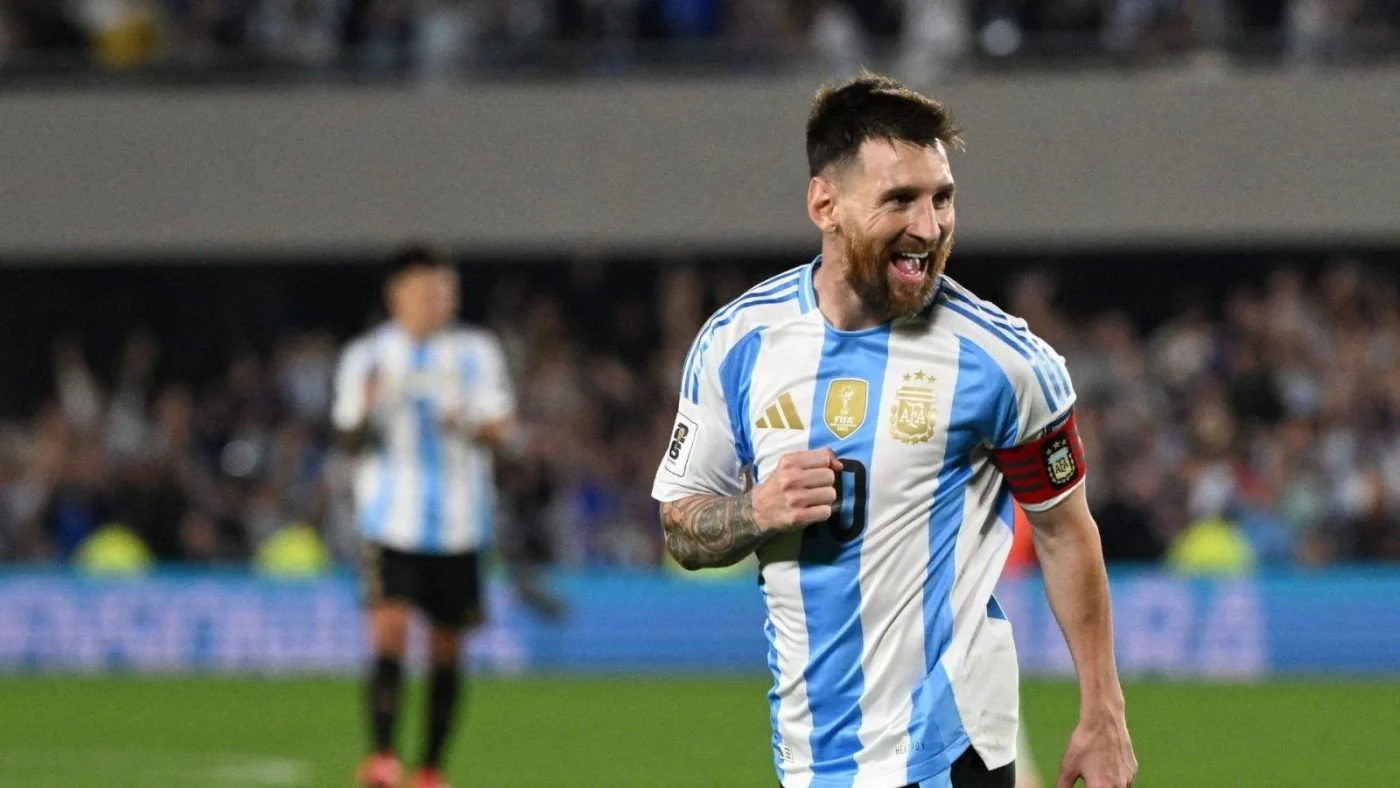
Lionel Messi widely regarded as the greatest footballer in history crossed one of sport’s most exclusive financial thresholds in 2026. According to Forbes, Messi’s net worth as of June 2026 hovers around $1.1 billion, making him just the fourth athlete to achieve billionaire status while still actively competing in a sport.
The number itself is staggering. But the more fascinating story is how he got there because unlike most athlete billionaires, Messi did not build his fortune through a single blockbuster investment or lucky stock pick. He built it layer by layer over two decades, through contracts, endorsements, real estate, brand partnerships, business ventures, and one of the most structurally complex sports deals ever constructed.
Lionel Messi is also starring at the FIFA World Cup 2026 right now, where he delivered a stunning hat-trick against Algeria in Argentina’s 3-0 opener a reminder that on the pitch and off it, the 38-year-old shows no signs of slowing down. To understand how the 2026 tournament where Lionel Messi is hunting his second World Cup title is structured, the complete World Cup 2026 format guide covers every stage in detail.
Lionel Messi Net Worth 2026: What the Numbers Actually Say
There is genuine debate about Messi’s exact net worth figure, with estimates ranging from $850 million to $1.1 billion depending on the source and methodology used. Here is what the most credible sources report:
| Source | Estimated Net Worth (2026) |
|---|---|
| Forbes | $1.1 billion |
| Bloomberg | ~$1 billion+ |
| Celebrity Net Worth | $1 billion |
| GIVEMESPORT / Parade | $850 million |
| Sports Illustrated | $850 million |
The variation reflects differences in how sources value illiquid assets particularly his Inter Miami equity stake and his publicly listed Spanish real estate investment company (REIT), Edificio Rostower Socimi. Unlike some athletes whose billionaire status comes mostly from one company stake, Messi’s fortune is spread across several categories salary, endorsements, real estate, and business ventures.
What is beyond dispute: according to a Sportico estimate, Messi has earned $1.2 billion in salary, bonuses, and endorsements over the course of his professional career. Even before factoring in investment returns or asset appreciation, his career earnings alone have crossed the billion-dollar mark.
The Foundation: How Barcelona Made Lionel Messi Wealthy
Messi arrived in Barcelona as a 13-year-old boy from Rosario, Argentina, with a growth hormone deficiency and no guaranteed future in football. Barcelona agreed to pay for his hormone treatment in exchange for joining their famed La Masia academy a decision that would eventually cost the club far more when he became the most expensive player on earth to retain.
Messi built the foundation of his fortune at FC Barcelona, where he rose from teenage prodigy to global superstar and eventually became the highest-paid player in the sport.
His salary trajectory at Barça tells the story of how quickly his market value evolved:
| Period | Approximate Annual Salary |
|---|---|
| First professional contract (early career) | ~$1.13 million/year |
| 2010–2014 | ~$20–40 million/year |
| 2017 peak contract | ~$99 million/year |
| Final Barcelona contract (2020, never fulfilled) | ~$150+ million/year |
At his peak during his final years at FC Barcelona, Messi’s salary was reported at approximately $99 million per year one of the highest ever recorded in club football history.
The 2020 contract that was leaked and never signed would have been even larger, but Barcelona’s financial collapse forced Lionel Messi out of the club in August 2021. Despite the abrupt departure, the Barça years alone generated hundreds of millions of dollars in salary and bonuses that formed the bedrock of his fortune. It also generated something more valuable than salary: global brand recognition worth far more than any individual paycheck.
The Adidas Lifetime Deal: $25 Million Per Year, Forever
One of the single most important financial decisions of Messi’s career happened not on a football pitch, but in a boardroom.
Lionel Messi has been associated with Adidas since 2006, signing a lifetime contract extension in 2017 reportedly worth around $25 million annually.
This is not an ordinary endorsement deal. A lifetime Adidas deal means Lionel Messi will continue earning from the partnership even after his playing career ends, and even after his public profile naturally declines from peak-athlete levels. For context, only Michael Jordan (Nike) and a handful of other athletes in history have secured lifetime endorsement agreements and Messi’s is among the most valuable.
The deal also positions Adidas to gain from Messi’s MLS-connected activity, as Adidas is the official kit supplier for every MLS team creating a unique three-way commercial relationship between Messi, Inter Miami, and the German sportswear giant.
The Adidas deal alone has generated an estimated $500+ million over Messi’s career and will continue generating income indefinitely. It is the single largest endorsement anchor in his financial portfolio and arguably the most important business decision he ever made.
The Inter Miami Deal: The Most Innovative Sports Contract in History
When Messi chose Inter Miami over Saudi Arabia’s Al Nassr in 2023, many financial analysts questioned whether he left money on the table. Looking at the full structure of his MLS deal, that criticism collapses immediately.
According to Sportico, Messi’s original deal with Inter Miami was worth up to $150 million total from his salary, signing bonus, and equity in the team. But the base contract figure is only the beginning of what makes this agreement extraordinary.
The Three-Layer Compensation Structure
Layer 1: Base Salary Messi’s base salary of $25 million for the 2026 season, with guaranteed compensation of $28.3 million, marks a drastic increase from the $12 million base he earned in his first MLS season. He is the highest-paid player in MLS history by a significant margin, with the second-highest earner (Son Heung-min of LAFC) earning $11.1 million.
Layer 2: Apple TV Revenue Share This is where Messi’s deal becomes genuinely unprecedented. The biggest off-field deal of Messi’s Inter Miami contract is his joint venture with Apple TV and MLS. Signed when he joined Inter Miami in 2023, the deal sees Messi take a share of MLS’s $250 million per year broadcasting agreement with Apple, earning around $50 million per year from that arrangement alone.
This is the most innovative element of any sports contract in recent memory. Messi is not just being paid as a player he is being paid as a media driver, compensated based on how many people subscribe to Apple TV+ to watch him play.
Layer 3: Inter Miami Equity At Inter Miami the MLS franchise co-owned by David Beckham that became the league’s most valuable club after Messi’s arrival in 2023 Messi is expected to receive an equity stake upon retirement. Inter Miami’s valuation has surged dramatically since his arrival, meaning that equity stake is worth considerably more than when the original deal was signed.
The Total Package
Inter Miami co-owner Jorge Mas confirmed that Messi collects around $70 million to $80 million annually when factoring in sponsorships and the special revenue-sharing deal with Apple. Combined with his endorsement income, Forbes estimated Messi earned $135 million in 2025 placing him among the very highest earners in global sports.
The Contract Extension
In October 2025, Messi signed a three-year extension with Inter Miami. His current Inter Miami contract now runs through December 31, 2028 ensuring his earning power remains at peak levels through the latter part of his thirties. He led the club to its first MLS Cup title in 2025, validating the financial investment on both sides.
Messi’s Endorsement Empire: $75 Million Per Year Off the Pitch
Messi’s on-field salary even at $25 million base represents a relatively small slice of his total annual income. The larger portion comes from commercial partnerships that leverage his global brand.
Messi’s total annual earnings in 2025 reached approximately $135 million, driven primarily by commercial income rather than salary. A significant portion comes from media rights participation linked to Apple and MLS broadcasting agreements, contributing an estimated $50 million per year. His long-term partnership with Adidas adds another $25 million annually.
His complete major endorsement portfolio includes:
Adidas Lifetime deal, ~$25 million/year. Boot and apparel partnership dating back to 2006, now covering his entire commercial persona.
Apple TV+ / MLS Revenue share, ~$50 million/year. The most innovative component of his financial structure, tying his earnings directly to streaming subscriber growth.
PepsiCo Long-term global advertising partnership, one of his most high-profile consumer brand deals.
Mastercard Global brand ambassador for the financial services giant’s football marketing campaigns.
Budweiser Official partner of FIFA tournaments, Messi features prominently in World Cup advertising campaigns.
Hard Rock International Brand ambassador for one of the world’s largest hospitality and entertainment companies particularly relevant given his Miami base.
Huawei Major technology partnership focused on Asian markets, where Messi’s commercial appeal is enormous.
Jacob & Co. Luxury watchmaker producing limited-edition Messi timepieces.
Más+ by Messi His own sports drink brand, launched in 2024, which adds both endorsement-style income and equity appreciation as the brand grows.
In 2026, Forbes estimated Messi’s annual earnings at $140 million, split equally between on-field and off-field income.
The breadth of his portfolio spanning technology, hospitality, finance, food, fashion, and sports media reflects a deliberate strategy to build a brand that is not dependent on any single sector or partner.
To understand how Messi’s commercial dominance in football compares across eras, the all-time FIFA World Cup records provide essential context on the global scale of football’s financial ecosystem. And for fans interested in how elite athletes convert sport into commercial empires a theme that cuts across football, tennis, and beyond our look at American tennis players building their brands covers parallel stories from another sport.
Messi’s Real Estate Portfolio: $300 Million in Property
Perhaps the most impressive single asset category in Messi’s portfolio is his real estate holdings, reportedly worth around $300 million. His properties include homes in Barcelona, Argentina, Miami, and Ibiza.
Personal Properties
Fort Lauderdale, Florida Messi’s primary US residence is a waterfront mansion in Fort Lauderdale, reportedly purchased for around $10.8 million. The property spans more than 10,000 square feet and includes 10 bedrooms, a private dock, swimming pool, gym, spa, and stunning waterfront views.
Castelldefels, Spain His long-time family home near Barcelona, featuring a private football field, swimming pool, gym, landscaped gardens, and panoramic Mediterranean views.
Rosario, Argentina A sprawling family estate in his hometown, maintained as a connection to his roots.
Ibiza & Other European Properties Luxury properties across high-value European vacation destinations.
Edificio Rostower Socimi His Real Estate Business Empire
Beyond personal homes, Messi has built a commercial real estate empire through his family investment vehicle.
Messi’s business portfolio includes the MiM Hotels chain, the real estate company Edificio Rostower, The Messi Brand, and Play Time Sports-Tech HoldCo LLC. Edificio Rostower Socimi debuted on the Spanish market at the end of 2024 with a valuation of 223 million euros, with a portfolio that includes seven hotels, three office assets, and apartments in Spain, London, and Paris, with Messi as chairman of the board and Antonela Roccuzzo as vice-chair.
In May 2026, Messi expanded the Rostower portfolio further: through his investment firm Edificio Rostower, Messi acquired the former Galerías Vía Wagner in Barcelona for €11.5 million. The 4,000 square meter property, located in the exclusive Turó Park area, will undergo a full renovation to be transformed into premium corporate offices.
The decision to publicly list Rostower as a REIT on a Spanish exchange is strategically important. It provides transparency and accountability for a major portion of his wealth, positions him as a serious institutional investor rather than an athlete with property holdings, and creates a structure that will continue generating returns long after his playing career ends.
Messi’s Business Ventures: Building Beyond Football
MiM Hotels Luxury Hospitality
One of Messi’s investments is the hotel chain MiM Hotels, launched in partnership with Majestic Hotel Group in 2017, through which he reportedly owns six luxury 4- and 5-star hotels located throughout Spain. The chain operates in high-value destinations including Ibiza, Mallorca, Sotogrande, and the Pyrenees ski resort area. In November 2025, hotel group Meliá took over management of the portfolio, bringing a major international operator’s commercial and distribution network to Messi’s hospitality assets.
Más+ by Messi Sports Drink Brand
Launched in 2024, Más+ by Messi is his own sports hydration brand, competing in the rapidly growing functional beverage market. The brand gives Messi both a commercial product to promote through his existing endorsement channels and an equity stake in a company whose value will grow independently of his athletic career.
UE Cornellà European Club Ownership
Messi acquired 100% ownership of the Spanish fifth-division football club UE Cornellà on April 16, 2026, marking his first venture into owning a European club while staying connected to his roots in Catalonia.
Cornellà is not a vanity purchase. The club, founded in 1951, possesses a strong youth development system that produced Jordi Alba, Arsenal goalkeeper David Raya, and Barcelona defender Gerard Martín. Located minutes from the Camp Nou, the club sits in a talent pipeline that feeds directly into elite European football.
He also co-owns Uruguayan club Deportivo LSM alongside former teammate Luis Suárez, and his family operates Leones de Rosario in Argentina building a multi-club ownership structure that mirrors what the most sophisticated football investors in the world are pursuing.
Play Time Sports-Tech HoldCo LLC
His San Francisco-based Play Time Sports-Tech HoldCo invests in sports, media, and technology globally positioning Messi at the intersection of Silicon Valley’s technology investment ecosystem and the global sports industry.
Additional Ventures
525 Rosario Media and production company launched in 2022, creating content and commercial opportunities around his personal brand.
The Messi Store A lifestyle and clothing brand with a physical location in Barcelona and online global presence, launched in 2019.
El Club de la Milanesa Investment in a popular Argentine restaurant chain, adding food service to his business portfolio in 2023.
MM Winemaker Partnership with a Switzerland-based company to launch his own wine range.
Messi’s Career Salary Timeline: Every Major Contract
Understanding the full arc of Messi’s salary history reveals how methodically his wealth was accumulated:
| Club | Period | Approximate Annual Salary |
|---|---|---|
| FC Barcelona (youth) | 2000–2004 | Minimal / development |
| FC Barcelona (first pro deal) | 2004–2008 | ~$1.13M growing to ~$10M |
| FC Barcelona (extension) | 2008–2014 | ~$20M–$40M/year |
| FC Barcelona (peak) | 2014–2021 | Up to $99M/year |
| Paris Saint-Germain | 2021–2023 | ~$41M/year (reduced after tax) |
| Inter Miami (original deal) | 2023–2025 | ~$20.4M base + revenue shares |
| Inter Miami (extension) | 2025–2028 | ~$25M base + $70–80M total |
The PSG chapter was financially underwhelming relative to his Barcelona peak but it served as a bridge that kept him at the elite level while his team in Florida prepared for his arrival. The Inter Miami deal, despite a lower stated base salary, has proven significantly more lucrative through its innovative revenue-sharing structure.
The Tax Controversy and Its Financial Impact
No honest account of Messi’s wealth is complete without addressing the 2016 tax fraud case.
In 2016, Messi and his father were found guilty in Spain of tax fraud related to income from image rights between 2007 and 2009. Messi was given a prison sentence that he did not serve under Spanish law and paid fines. The case became one of the most public controversies of his career, though it did not derail his playing or commercial success.
The episode cost Messi financially through fines and settlements, and reputationally through significant media attention. But it also prompted a thorough restructuring of his financial management the family office approach, the REIT structure, the formalized investment vehicles that arguably made his wealth management more sophisticated and better positioned for long-term growth.
The World Cup Effect on Messi’s Net Worth
The 2022 FIFA World Cup victory in Qatar was not just the sporting achievement of Messi’s career it was a commercial accelerant unlike anything in his financial history.
Winning the World Cup, the one major trophy that had eluded him, completed a sporting legacy that sponsors had always been slightly reluctant to endorse unreservedly. After Qatar, every commercial hesitation evaporated. His post-2022 endorsement valuations increased substantially. The Inter Miami deal, signed just months after the World Cup, was structured in a way that would have been impossible to negotiate without the context of that championship.
The 2026 World Cup is now adding another layer. As one of football’s highest-paid stars, Messi’s overall compensation package, including revenue-sharing agreements with Apple, Adidas, and MLS commercial partners, ranges between $70–80 million per year. His World Cup performances drive viewership of MLS content on Apple TV+, directly benefiting his revenue-sharing income. Every goal he scores in the tournament increases his commercial value simultaneously in football, entertainment, and media.
Fans wanting to track how Messi’s World Cup 2026 goals compare to the tournament’s top scorers can follow our updated 2026 World Cup Golden Boot predictions and tracker where Messi’s hat-trick against Algeria makes him an immediate frontrunner. And for fans who love the tactical and creative side of football that has defined Messi’s genius, our guide to soccer skills in the Champions League explores the techniques that separate elite players from the rest.
Messi vs. Ronaldo: Who Is Richer in 2026?
The Messi vs. Ronaldo debate has always extended beyond football into finances. In 2026, both men are billionaires and both are competing at the same World Cup. But Ronaldo currently holds the financial edge.
The Portuguese forward became soccer’s first billionaire after moving to Saudi Arabian club Al Nassr in 2023 on a contract worth over $200 million per year. Reports from Bloomberg indicate Ronaldo has earned over $550 million in career wages across stints with Manchester United, Real Madrid, Juventus, and Al Nassr. Ronaldo’s net worth in 2026 is estimated at $1.2 billion.
| Metric | Messi | Ronaldo |
|---|---|---|
| Estimated net worth (2026) | ~$1–1.1 billion | ~$1.2 billion |
| Annual earnings | ~$135–140 million | ~$200+ million |
| Current salary | $25M base ($70–80M total) | ~$200M (Al Nassr) |
| Primary investment | Edificio Rostower REIT | CR7 brand, property |
| Club ownership | UE Cornellà, Deportivo LSM | None currently |
| Endorsement anchor | Adidas (lifetime) | Nike (lifetime) |
Ronaldo’s Al Nassr contract pays roughly three times what Messi earns in salary alone. But Messi’s more diversified investment structure particularly the Inter Miami equity, the REIT, and the multi-club ownership strategy may prove more durable over the long term.
Messi’s Lifestyle: How He Spends His Billion
Private Aviation Messi owns a private jet, a 2004 Gulfstream V, reportedly worth around $15 million.
Car Collection His collection includes a $2 million Pagani Zonda Tricolore, Ferrari F430 Spyder, Dodge Charger SRT8, and Maserati GranTurismo, among other rare and exotic vehicles. Reports also suggest the collection includes a Ferrari F430 Spider, Bentley Bentayga, Range Rover Vogue, Cadillac Escalade, and multiple Audi performance models.
Philanthropy Messi has been consistently charitable throughout his career. He funds the Leo Messi Foundation, which focuses on healthcare and education access for vulnerable children. He has donated equipment and facilities to hospitals, funded youth football programs across Argentina, and made significant individual donations during global crises. His philanthropy is structured to continue regardless of his playing career.
Is Messi Officially a Billionaire? The Verdict
The honest answer is: almost certainly yes, but with an asterisk on the exact figure.
Forbes and Bloomberg the two most credible net worth sources in the world both have Messi above or at the $1 billion mark in 2026. Celebrity Net Worth notes that achieving the precise $1 billion threshold depends heavily on how you value Messi’s Inter Miami equity stake and the liquidity of his REIT both legitimate but difficult-to-value assets.
What is certain is that Messi’s net worth estimate went from $650 million in 2024 to approximately $850 million–$1.1 billion in 2026 an increase of $200–450 million in a single year, driven by the Inter Miami contract extension, the Edificio Rostower listing, the MLS Cup title bonus, and continued compound growth across all his income streams.
He is either a billionaire right now or on the doorstep of becoming one within months. At age 38, still playing at the World Cup, with his Inter Miami deal running through 2028, his Adidas lifetime deal never expiring, and his real estate and business portfolio expanding, the trajectory points in only one direction.
How Lionel Messi Built His Fortune: The Key Pillars
| Revenue Stream | Estimated Total Contribution |
|---|---|
| Career football salaries (Barcelona, PSG, Miami) | ~$700M+ |
| Adidas lifetime deal (ongoing) | ~$25M/year |
| Apple TV / MLS revenue share | ~$50M/year |
| Other endorsements (Pepsi, Mastercard, etc.) | ~$20–25M/year |
| Real estate (Edificio Rostower + personal) | ~$300M portfolio |
| Hotel business (MiM Hotels) | Multi-million annual revenue |
| Inter Miami equity stake | Appreciating asset |
| Club ownership (Cornellà, Deportivo LSM) | Growing equity |
| Consumer brands (Más+, Messi Store) | Equity + commercial |
| Media / production (525 Rosario) | Private valuation |
The architecture of Messi’s wealth reflects a principle that the best financial advisors in sports have been pushing athletes toward for decades: convert peak earning power into diversified, income-producing assets before the playing career ends. Messi did this more effectively, more early, and more completely than almost any athlete before him.
Frequently Asked Questions
Is Lionel Messi a billionaire in 2026?
According to Forbes and Bloomberg, yes Messi’s net worth in 2026 is estimated at approximately $1 to $1.1 billion, making him one of only four athletes in history to achieve billionaire status while still actively competing.
How much does Lionel Messi earn per year in 2026?
Lionel Messi earns a base salary of $25 million at Inter Miami (with guaranteed compensation of $28.3 million). His total annual income including the Apple TV revenue share, Adidas deal, and other endorsements is estimated at $135–140 million per year.
What is Messi’s biggest source of income?
His Apple TV / MLS revenue-sharing deal ($50M/year) and Adidas lifetime deal ($25M/year) are his two largest individual income streams, together accounting for roughly $75 million per year before salary or other endorsements.
What businesses does Lionel Messi own?
Lionel Messi owns MiM Hotels (luxury hospitality), Edificio Rostower Socimi (real estate REIT), UE Cornellà (Spanish football club), Deportivo LSM (Uruguayan football club), Más+ by Messi (sports drink), The Messi Store (fashion), 525 Rosario (media), Play Time Sports-Tech HoldCo (technology investment), and a stake in El Club de la Milanesa (restaurants).
What is Messi’s real estate worth?
His personal real estate portfolio is estimated at around $300 million, including properties in Fort Lauderdale, Barcelona, Rosario, and Ibiza. His commercial real estate vehicle, Edificio Rostower Socimi, is separately valued at over €223 million ($232 million).
How does Lionel Messi compare to Cristiano Ronaldo financially?
Ronaldo holds a slight financial edge, with an estimated net worth of $1.2 billion compared to Messi’s $1–1.1 billion. Ronaldo earns more in annual salary (~$200M at Al Nassr vs. Messi’s ~$80M total at Inter Miami), but Lionel Messi has a more diversified investment portfolio including real estate, club ownership, and a publicly listed REIT.
When did Lionel Messi become a billionaire?
Messi reached billionaire status in 2025–2026, accelerated by his Inter Miami contract extension, the Edificio Rostower REIT listing, MLS Cup prize money, and continued compound growth across his endorsement and business portfolio.
