

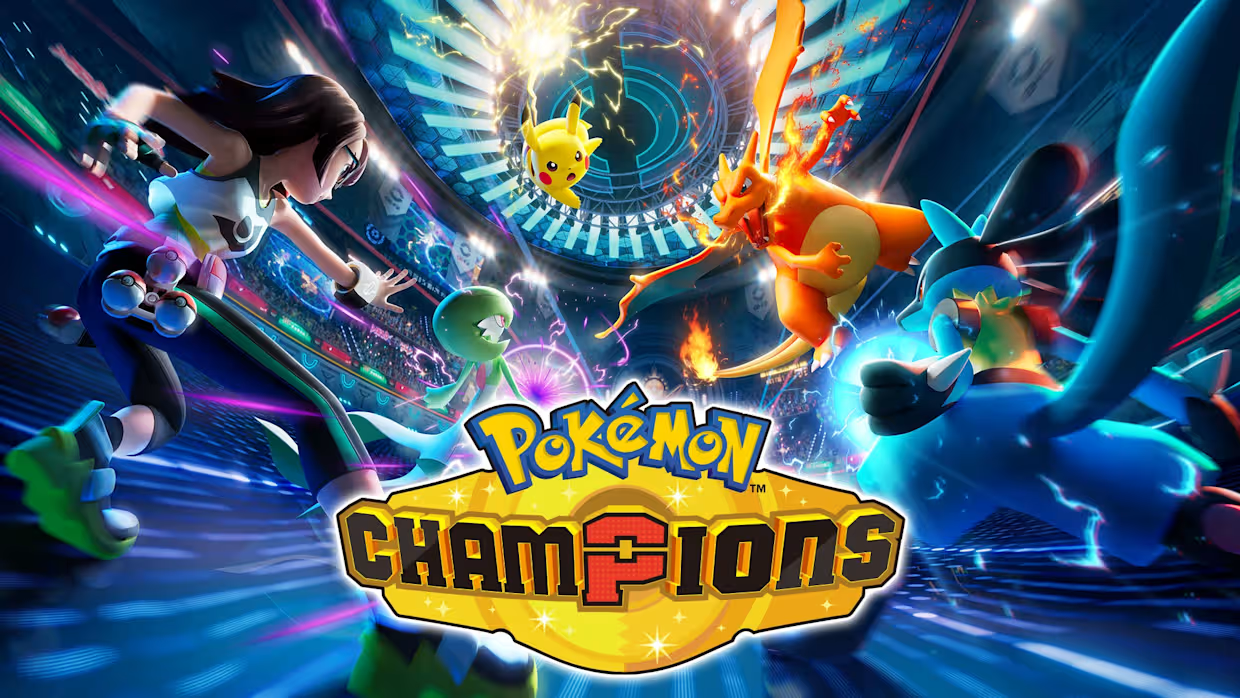
Pokémon Champions is the newest official competitive Pokémon game from The Pokémon Company, released on April 8, 2026 for Nintendo Switch before its mobile version launched on June 17, 2026 the same day Regulation M-B officially went live. The game is built entirely around ranked online battles, Mega Evolutions, and team-building depth that draws heavily from the VGC format making it one of the most competitive Pokémon titles ever released.
This Pokémon Champions tier list is fully updated for Regulation M-B, which runs from June 17 through August 26, 2026, and introduces 22 new Pokémon and 15 new Mega Evolutions into the ranked meta. Whether you’re playing Singles, Doubles, or experimenting with Mega Evolution builds, this guide ranks every viable option from S-Tier down to D-Tier based on actual win rate data and battle performance not just theory.
If you’re new to competitive Pokémon ranking systems and want to understand how battle simulators shape the meta before climbing the ladder, our guide to Pokémon Showdown as a competitive battle simulator is an excellent starting point.
What Is Regulation M-B in Pokémon Champions?
Before diving into the tier rankings, it’s essential to understand the rules of the current format.
Regulation M-B continues the Mega Evolution-centered format introduced in Regulation M-A while expanding the roster significantly:
- 22 new Pokémon added to the ranked roster
- 15 new Mega Evolutions introduced, including Mega Raichu (available via launch event)
- New held items added: Life Orb, Wide Lens, and Light Clay all of which significantly affect the meta
- All Paradox Pokémon remain banned (no Flutter Mane, Iron Hands, Roaring Moon, etc.)
- All Treasures of Ruin remain banned (Chien-Pao, Chi-Yu, Ting-Lu, Wo-Chien)
- Koraidon and Miraidon also remain banned
The absence of Paradox Pokémon and Treasures of Ruin fundamentally changes what tier lists look like compared to previous VGC formats. Any tier list ranking Flutter Mane or Iron Hands as viable is outdated those are not legal in Pokémon Champions Regulation M-B.
The introduction of Life Orb and Wide Lens in Regulation M-B is also a major shakeup. Expect powerful but fragile offensive Pokémon to see elevated usage as the new meta develops, while Trick Room and weather-focused teams adapt to new offensive threats.
For players who want to understand how the competitive Pokémon meta has evolved through generations to reach this point, our look at what Pokémon Gen 10 could look like offers useful perspective on the franchise’s competitive direction.
How We Rank Pokémon in This Tier List
All rankings in this guide are based on:
- Actual win rate data from competitive battles analyzed across the Regulation M-A season (88,946 battles analyzed from June 2–16, 2026)
- Usage rates tracked across the ranked ladder (Incineroar: 62.4% usage, Kingambit: 54.1%, Garchomp: 47.8%)
- Tournament results from the 2026 VGC season, including the North America International Championship 2026
- Team archetype viability how well each Pokémon fits into the best team compositions
Tier definitions:
| Tier | Meaning |
|---|---|
| S Tier | Consistently dominant. High win rate, high usage, essential on most top teams. |
| A Tier | Excellent and widely viable. Appear on most high-level teams, slightly less dominant than S. |
| B Tier | Solid and reliable. Require more support or fit specific roles but perform well in the right team. |
| C Tier | Situational. Useful in specific matchups or niche strategies but not broadly recommended. |
| D Tier | Generally outclassed. Limited scenarios where these are the best choice. |
Pokémon Champions Singles Tier List (Regulation M-B)
Singles is the 1v1 format where each player brings six Pokémon and battles until one trainer has no Pokémon remaining. The Singles meta rewards individual Pokémon power and moveset coverage more than team synergy.
S Tier Singles
Kangaskhan The defining Pokémon of the current Singles meta. Kangaskhan’s combination of bulk, coverage, and ability utility makes it the single most reliable win condition in the format. Its access to Scrappy lets it hit Ghost-types with Normal moves, eliminating a key defensive immunity. Consistently posting the highest Singles win rates.
Eternal Flower Floette One of the most unique S-Tier options in any modern Pokémon game. Its exclusive stat spread and access to Light of Ruin give it unmatched special attack power among non-legendary options. Floette requires careful positioning but rewards patient play with dominant damage output.
Incineroar A staple in competitive Pokémon for years, Incineroar remains one of the best in Singles thanks to Intimidate, Fake Out, and Knock Off. It provides utility at every phase of the game and fits almost every team archetype. Usage rate: 62.4% across all ranked battles.
Sneasler Sneasler’s pure Speed and Poison/Fighting typing give it an incredible offensive profile. It runs Dire Claw to inflict status conditions rapidly while dealing strong neutral damage across the meta. A true offensive threat in Singles.
A Tier Singles
Garchomp Dragon/Ground typing with Rough Skin and an incredible Speed tier. One of the safest physical attackers in the format. Usage rate: 47.8%.
Charizard Standard Charizard (non-Mega) in Singles form remains potent thanks to Solar Power and Drought synergy. A dangerous Sun team anchor.
Primarina Bulk, Fairy/Water typing, and reliable damage make Primarina one of the best defensive threats. Handles Dragons and Fighting types cleanly.
Pelipper The defining Drizzle weather setter. Appears on nearly every Rain team. Enables Swift Swim users and provides Tailwind support.
Corviknight One of the best defensive walls in Singles, with Pressure, reliable healing, and Defog utility. Difficult to knock out without super-effective hits.
B Tier Singles
Gengar Fast and powerful, but fragile and vulnerable to priority moves. Strong in specific team builds.
Tyranitar Sand Stream sets weather immediately, boosting Special Defense and powering Excadrill. Outclassed in raw speed but valuable for team support.
Hawlucha Electrically lethal under Electric Terrain. Unburden combinations can sweep unprepared teams. Requires setup.
Aerodactyl Top-tier Speed with Rock Head and Head Smash. A solid mid-tier physical attacker with limited but effective coverage.
Wash Rotom Bulky Water/Electric typing with Levitate. Handles a lot of common threats but falls short against dedicated counters.
C Tier Singles
Machamp Strong damage but limited typing and predictability. Outclassed by Sneasler in most roles.
Gyarados Powerful in specific scenarios but inconsistency holds it back. Needs Mega to reach its ceiling.
Alakazam Extreme Special Attack but too fragile. Requires heavy team support to function effectively.
Arcanine Balanced stats but often outperformed by stronger Sun-archetype options like Charizard and Incineroar.
Rhydon Considerable physical bulk and power but vulnerable to the Water and Grass types that populate the current meta.
D Tier Singles
These Pokémon are outclassed in the current Regulation M-B meta. They have limited offensive or defensive utility compared to higher-tier options and should be avoided in serious ranked play:
Electrode, Dugtrio, Lumineon, Togekiss (without Mega), Luvdisc
Pokémon Champions Doubles Tier List (Regulation M-B)
Doubles is a 2v2 format where both players send out two Pokémon simultaneously. Team synergy, Fake Out priority, and supportive abilities matter enormously. This is the primary format at major tournaments.
S Tier Doubles
Incineroar The undisputed king of Pokémon Champions Doubles. Incineroar provides Intimidate support, Fake Out pressure, and pivoting options that let teammates safely enter the field. It influences every battle even when not directly attacking. Universally present on top competitive teams. Usage rate: 62.4%.
Kingambit The premier late-game physical sweeper. Kingambit’s Supreme Overlord ability grows stronger with each fainted ally, and its Steel/Dark typing gives it excellent defensive coverage. Usage rate: 54.1%. Nearly uncounterable once set up correctly.
Garchomp The most consistent A-to-S level attacker in Doubles. Fast, hard-hitting, and with the Rough Skin / Rocky Helmet combination, it punishes contact moves passively. Dragon/Ground coverage cleans up most common threats. Usage rate: 47.8%.
Eternal Flower Floette Retains its dominance from Singles into Doubles. Light of Ruin does enormous spread damage in Doubles battles and Floette’s defensive typing resists several common threats. Requires a Protect-focused partner to manage recoil.
A Tier Doubles
Charizard-Y (Mega) Sets permanent Sun, powers up Fire-type moves for the entire team, and enables instant Solar Beam. The cornerstone of the Sun Offense archetype currently posting a 74.5% win rate.
Venusaur (Mega) Pairs beautifully with Sun teams, using Chlorophyll for doubled Speed in Sun while hitting incredibly hard with Growth-boosted Petal Blizzard or Sludge Bomb.
Sinistcha Surprisingly high win rate due to Matcha Gotcha’s recovery, spread damage, and Calm Mind stacking. A difficult wall to break in Doubles.
Whimsicott Prankster Encore and Tailwind support. One of the best team supporters in the format. Nearly every speed control team features Whimsicott.
Gengar (Mega) Shadow Tag traps opponents, preventing switches at a critical moment. Fast and hits incredibly hard with Mega-boosted Special Attack.
Sneasler Equally threatening in Doubles as in Singles. Dire Claw spreads status conditions and creates chaos in the opponent’s field management.
B Tier Doubles
Pelipper Every Rain team needs Drizzle. Pelipper sets weather, provides Tailwind, and offers chip damage. Lower ceiling but extremely reliable as a support pick.
Archaludon Sturdy + Electric Terrain synergy. A bulky Electric attacker with decent coverage. Paired well with Whimsicott for setup.
Excadrill Under Sand Rush, Excadrill becomes one of the fastest Pokémon in the game. A devastating sweeper in dedicated sand teams built around Tyranitar.
Hatterene Magic Bounce reflects status moves and hazards. A nuisance for Trick Room teams and a strong supporter in slower compositions.
Dragonite Inner Focus + priority Extreme Speed makes Dragonite a reliable revenge killer. Multiscale makes it surprisingly bulky on entry.
Farigiraf The best Trick Room setter in the current meta. Sap Sipper, Armor Tail, and Psychic typing make it uniquely positioned to set and maintain Trick Room against most common disruptors.
Toxapex Nearly impossible to knock out. Regenerator, Baneful Bunker, and Recover make Toxapex one of the most frustrating defensive walls in the format. Best used for stall-oriented Doubles compositions.
Scizor (Mega) Bullet Punch priority and Technician make Mega Scizor a reliable damage dealer. The Steel/Bug typing offers excellent defensive utility.
Primarina Carries over its Singles viability into Doubles thanks to reliable Sparkling Aria support and Fairy/Water dual coverage.
C Tier Doubles
Armarouge High Special Attack but slow. Works in Trick Room but faces stiff competition from other Trick Room abusers.
Hisuian Arcanine Intimidate user with decent bulk. Outclassed by Incineroar in nearly every meaningful respect but still playable.
Oranguru Instruct support is incredibly powerful in the right team, copying a partner’s move immediately. Extremely situational but high-reward.
Meowscarada Fast Grass/Dark attacker with Protean (pre-Mega). Threatens Water and Ground types but struggles against Steel and Fighting threats currently dominating the meta.
Feraligatr (Mega) Dragonize converts Normal moves to Dragon-type with a power boost. Interesting damage output but speed stat limits Doubles viability.
D Tier Doubles (Avoid in Ranked)
These Pokémon are outclassed in the Doubles format and are not recommended for competitive ranked play in Regulation M-B:
Luvdisc, Electrode, Togetic, Butterfree, Carnivine, Delibird
Pokémon Champions Mega Evolution Tier List (Regulation M-B)
Mega Evolutions are central to the Pokémon Champions experience. Each Mega requires its corresponding Mega Stone, and only one Mega Evolution per team is permitted per battle. Choosing the right Mega is often the most important team-building decision.
Regulation M-B introduces 15 new Mega Evolutions to the ranked meta. The rankings below cover both established Megas from Regulation M-A and the newly introduced ones as they settle into the meta.
S Tier Mega Evolutions
Mega Gengar One of the fastest Pokémon in the entire game with enormous Special Attack. Shadow Tag permanently traps opponents, preventing them from switching out at critical moments. This ability alone elevates Mega Gengar above nearly every other Mega option in Singles and Doubles.
Mega Charizard Y The absolute cornerstone of the most dominant team archetype in the current meta Sun Offense at 74.5% win rate. Drought sets permanent Sun, boosting Fire-type moves by 50% and enabling instant Solar Beam for the entire team. Versatile coverage and reliable damage output across every game state.
Mega Delphox A speedster Mega with excellent coverage and immunity to Ground-type moves, making it superior to other Fire Megas in specific matchups. Psychic/Fire typing hits cleanly, and its speed tier outruns most un-boosted threats.
A Tier Mega Evolutions
Mega Venusaur Chlorophyll doubles Speed in Sun, and Thick Fat adds Fire and Ice resistance. Hits hard with petal Blizzard or Sleep Powder + Energy Ball. The best Mega partner for Charizard Y teams.
Mega Scizor Bullet Punch priority with Technician is devastating. Provides consistent, safe damage and excellent defensive typing.
Mega Tyranitar Sand Stream sets weather for the team, Special Defense gets boosted in Sand, and Mega Tyranitar’s raw physical Attack is among the highest in the game. Speed limitations are the only thing holding it back from S Tier.
Mega Greninja Highly agile with one of the best type-changing abilities in the game. Can adapt its typing to the move being used, making it difficult to wall. Excellent in both Singles and Doubles.
Mega Froslass Posted a 63.8% win rate in the Regulation M-A competitive analysis. Curse + Spikes or Freeze-Dry threats create pressure that opponents often struggle to manage. A key piece of the Snow archetype.
B Tier Mega Evolutions
Mega Feraligatr Dragonize converts Normal attacks to Dragon-type with a power boost. Decent offensive Mega but outperformed by faster options.
Mega Kangaskhan Parental Bond hits twice per move for 1.25x total damage. An overwhelming power spike but requires Kangaskhan already occupying a team slot.
Mega Aerodactyl Speed tier jumps dramatically. Tough Claws boosts contact moves. Solid damage but limited coverage options.
Mega Blastoise Mega Launcher boosts pulse moves to 1.5x power. Reliable defensive Mega with Rapid Spin utility. Lacks the offensive dominance of top-tier Megas.
C Tier Mega Evolutions
These Megas have situational uses but are generally outpaced by higher-tier options. Their stat distributions are uneven or their abilities are less impactful in the current Regulation M-B meta:
Mega Steelix, Mega Slowbro, Mega Heracross, Mega Pidgeot
D Tier Mega Evolutions (Avoid)
Weakest Mega options currently available. Their stats are outclassed and they are difficult to build around effectively:
Mega Beedrill (non-U-turn lead), Mega Jumpluff, Mega Lickitung
Best Team Archetypes in Pokémon Champions (Regulation M-B)
Beyond individual Pokémon, winning consistently in Pokémon Champions requires understanding which team strategies work best. Based on win rate data from 88,946+ battles analyzed:
1. Sun Offense 74.5% Win Rate (Best Archetype)
The most dominant team archetype in the current meta. Built around Mega Charizard Y setting Drought, with Mega Venusaur (Chlorophyll), Incineroar, Kingambit, Sneasler, and a flexible sixth slot.
Core pairs (each at 73.4% win rate across thousands of games):
- Charizard-Y + Venusaur
- Incineroar + Kangaskhan
- Kingambit + Garchomp
- Sneasler + Whimsicott
Sun Offense pressures opponents with immediate power and requires minimal setup compared to weather-dependent archetypes.
2. Perish Trap 72.1% Win Rate
Built around forcing Perish Song and preventing the opponent from switching out to escape it. Mega Gengar is essential Shadow Tag traps opponents, Perish Song counts down, and the team wins once all trapped Pokémon faint. Requires careful execution but posts extremely high win rates in experienced hands.
Core Pokémon: Mega Gengar, Incineroar (Fake Out support), Farigiraf (Trick Room option), Whimsicott (Prankster Encore disruption)
3. Snow (Hail) 69.0% Win Rate
Mega Froslass anchors the Snow archetype, using Aurora Veil to halve damage from all attacks for five turns while setting Spikes. Blizzard becomes 100% accurate in Snow, hitting both opponents in Doubles.
Core Pokémon: Mega Froslass, Archaludon (Electric terrain pivot), Scizor (Steel priority), Primarina (Fairy coverage)
4. Hard Trick Room 62.3% Win Rate
Farigiraf sets Trick Room with Armor Tail preventing Fake Out interference. Slow, hard-hitting Pokémon like Tyranitar, Mega Steelix, and Armarouge then operate at max speed for five turns.
Best Pokémon Champions Starter: Which Should You Choose?
For players just beginning their Pokémon Champions journey, starter choice matters for early ranked progression. Based on performance across the first weeks of ranked play, here is the verdict:
Best starter for beginners: Incineroar line (Litten) Incineroar is the most universally applicable Pokémon in the entire game. Starting with Litten ensures you always have a world-class Doubles supporter and one of the strongest Singles Pokémon available without needing to recruit through Victory Points.
Best starter for offensive players: Sneasler line (Sneasel Hisuian) If you prefer aggressive, high-Speed offensive play in Singles, the Hisuian Sneasel line evolving into Sneasler gives you one of the best attackers in the meta immediately.
Best starter for strategy-focused players: Primarina line (Popplio) Primarina’s Fairy/Water dual typing handles a wide variety of threats and its bulk makes it forgiving for newer players learning the Doubles format.
If you enjoy exploring every Pokémon across the franchise’s history while building your roster, our complete guide to Pokémon human characters and their significance provides useful background on the world Pokémon Champions draws from. And for hidden mechanics that experienced players use to gain an edge, the Pokémon FireRed and LeafGreen hidden item guide shows how deeply item knowledge has always mattered in competitive Pokémon.
How to Climb Ranked Battles in Pokémon Champions
Understanding the tier list is only part of the equation. Here are the most impactful things you can do to improve your ranking:
1. Anchor your team with S-Tier Pokémon first Every top team in Pokémon Champions includes at least two S-Tier Pokémon. Build around Incineroar + one of Kangaskhan, Garchomp, or Kingambit as your foundation before adding situational picks.
2. Choose one team archetype and master it The meta rewards deep knowledge of a single strategy over broad familiarity with many teams. Sun Offense is the safest starting point given its 74.5% win rate and straightforward game plan.
3. Learn Doubles positioning fundamentals In Doubles, lead selection (which two Pokémon to send out first) and target priority (which opponent to attack each turn) matter more than any individual Pokémon’s stats. Practice positioning before obsessing over builds.
4. Use Victory Points to recruit top-tier Pokémon Pokémon Champions lets you recruit Pokémon from the ranked pool using Victory Points (VP) earned from battles. Prioritize recruiting Incineroar, Sneasler, and Kangaskhan first they appear most regularly in the recruitment lineup and transform any team immediately.
5. Adapt to Regulation M-B’s new Megas With 15 new Mega Evolutions entering the meta on June 17, 2026, the meta will shift meaningfully over the first few weeks. Monitor win-rate data and adapt your team composition as Mega Raichu, newly added Megas, and Life Orb interactions become clearer.
For players who enjoy deep competitive gaming tier lists beyond Pokémon, our Genshin Impact character tier list and Cookie Run Kingdom tier list follow the same structured ranking approach applied to other major competitive games.
Pokémon Champions Tier List: Quick Reference Summary
Singles Quick Reference
| Tier | Pokémon |
|---|---|
| S | Kangaskhan, Eternal Flower Floette, Incineroar, Sneasler |
| A | Garchomp, Charizard, Primarina, Pelipper, Corviknight |
| B | Gengar, Tyranitar, Hawlucha, Aerodactyl, Wash Rotom |
| C | Machamp, Gyarados, Alakazam, Arcanine, Rhydon |
| D | Electrode, Dugtrio, Lumineon, Togekiss, Luvdisc |
Doubles Quick Reference
| Tier | Pokémon |
|---|---|
| S | Incineroar, Kingambit, Garchomp, Eternal Flower Floette |
| A | Mega Charizard-Y, Mega Venusaur, Sinistcha, Whimsicott, Mega Gengar, Sneasler |
| B | Pelipper, Archaludon, Excadrill, Hatterene, Dragonite, Farigiraf, Toxapex, Mega Scizor, Primarina |
| C | Armarouge, Hisuian Arcanine, Oranguru, Meowscarada, Mega Feraligatr |
| D | Luvdisc, Electrode, Togetic, Butterfree, Carnivine, Delibird |
Mega Evolution Quick Reference
| Tier | Mega Evolutions |
|---|---|
| S | Mega Gengar, Mega Charizard Y, Mega Delphox |
| A | Mega Venusaur, Mega Scizor, Mega Tyranitar, Mega Greninja, Mega Froslass |
| B | Mega Feraligatr, Mega Kangaskhan, Mega Aerodactyl, Mega Blastoise |
| C | Mega Steelix, Mega Slowbro, Mega Heracross, Mega Pidgeot |
| D | Mega Beedrill, Mega Jumpluff, Mega Lickitung |
Pokémon Champions Tier List FAQ
What is the best Pokémon in Pokémon Champions?
Incineroar is widely considered the best all-around Pokémon in Pokémon Champions, with a 62.4% usage rate across Singles and Doubles. Kangaskhan is the strongest pure Singles pick, while Kingambit is the most dominant late-game threat in Doubles.
What is Regulation M-B in Pokémon Champions?
Regulation M-B is the current competitive format in Pokémon Champions, running from June 17 to August 26, 2026. It adds 22 new Pokémon and 15 new Mega Evolutions to the Regulation M-A ruleset and introduces new held items including Life Orb, Wide Lens, and Light Clay.
Are Paradox Pokémon legal in Pokémon Champions?
No. All Paradox Pokémon (Flutter Mane, Iron Hands, Roaring Moon, etc.) are banned in Pokémon Champions Regulation M-A and M-B. Any tier list ranking them is outdated.
What is the best team archetype in Pokémon Champions?
Sun Offense is the strongest team archetype in the current meta with a 74.5% win rate, built around Mega Charizard Y and Incineroar. Perish Trap (72.1%) and Snow (69.0%) are the next strongest archetypes.
What is the best Mega Evolution in Pokémon Champions?
Mega Gengar and Mega Charizard Y are the two best Mega Evolutions in the game. Gengar’s Shadow Tag ability is uniquely powerful, while Charizard Y’s Drought anchors the entire Sun Offense team archetype.
What starter is best in Pokémon Champions?
Incineroar (starting with Litten) is the best starter for most players due to its universal team utility. For aggressive players, Hisuian Sneasel evolving into Sneasler offers a top-tier offensive option.
How often is the Pokémon Champions tier list updated?
The competitive meta shifts with each new Regulation. Regulation M-B launched on June 17, 2026, and this tier list will continue to be updated as win rate data and tournament results accumulate over the season.
Where can I practice Pokémon Champions battle strategies?
Pokémon Showdown offers the best practice environment for learning competitive Pokémon formats. It mirrors the VGC ruleset that Pokémon Champions builds upon and lets you test team compositions without resource investment.
