

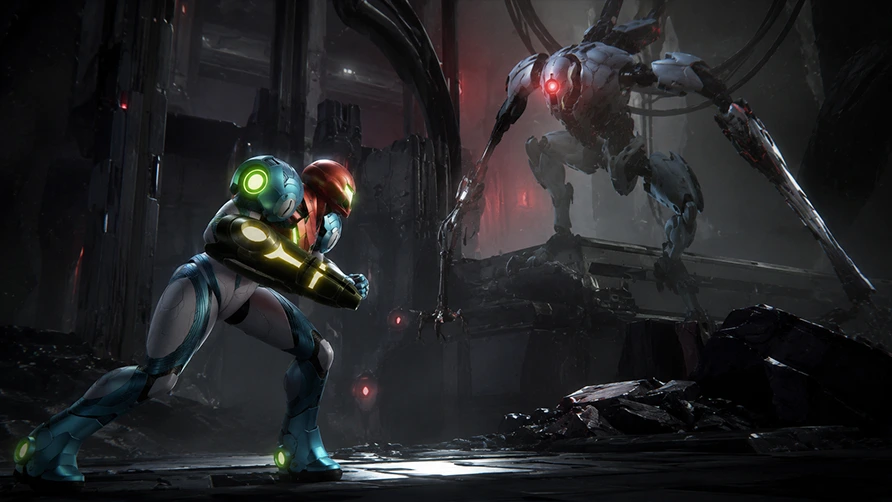
Nineteen years. That is how long Metroid fans waited for a direct sequel to Metroid Fusion. When Nintendo finally announced Metroid Dread at E3 2021, the reaction was somewhere between disbelief and euphoria. When the game released on October 8, 2021, it did something rarer still it not only met those expectations but exceeded them, delivering what many critics and longtime fans still consider the finest entry in the 2D Metroid lineage.
Metroid Dread holds a Metacritic score of 88, is rated “Mighty” by OpenCritic and recommended by 94% of critics, and is ranked in the top 2% of all reviewed games. It won multiple Game of the Year awards in 2021, including Nintendo’s own GOTY honors in many regional polls. Its sales numbers the fastest-selling Metroid game in history at launch vindicated Nintendo’s long-dormant 2D franchise entirely.
What Is Metroid Dread? The Basics
Metroid Dread is a 2D side-scrolling action-adventure game a Metroidvania developed jointly by MercurySteam (the Spanish studio behind Metroid: Samus Returns) and Nintendo EPD, produced by franchise guardian Yoshio Sakamoto. It is the fifth mainline 2D Metroid game and the direct narrative conclusion to the five-game Metroid arc that began with the original 1986 NES title.
You play as Samus Aran, the galaxy’s most powerful bounty hunter, sent to the remote planet ZDR to investigate a mysterious transmission suggesting the survival of the X Parasite a lifeform Samus was believed to have eradicated in Metroid Fusion. What begins as a routine investigation descends into one of the most tense, cinematic, and mechanically refined experiences in the series’ history.
The game is set entirely on ZDR, a large planet divided into eight distinct biomes, each with its own visual identity, environmental hazards, enemy types, and an EMMI (Extraplanetary Multiform Mobile Identifier) robot patrolling a locked-down zone within it. As you explore, you regain abilities lost at the start, which open new paths and create the classic Metroidvania feedback loop of exploration → new ability → new area → new exploration.
What distinguishes Metroid Dread from its predecessors is the addition of the EMMI: unkillable pursuit robots that hunt Samus through their designated patrol zones, creating a horror-tinged stealth-and-survival layer that sits on top of the game’s standard action and exploration. The game earns its name Dread through these encounters.
For players building deep-dive knowledge on character builds and game systems across Nintendo and action RPG titles, our HSR tier list guide explores how character kits and ability synergies work in ways that complement your understanding of progression systems in games like Dread.
Story Overview: The Conclusion of Samus Aran’s Saga
Metroid Dread is Metroid 5 in the direct numerical sense but more importantly, it is the narrative endpoint of everything that began in the original Metroid in 1986. Understanding the story fully requires some knowledge of the preceding games (particularly Metroid Fusion), but the game provides enough contextual briefing through ADAM’s dialogue and in-game lore entries that newcomers can follow along.
The Setup
Samus Aran receives an assignment from the Galactic Federation: travel to the uncharted planet ZDR to investigate a transmission suggesting the X Parasite a microscopic organism that mimics the genetic makeup of any creature it infects may have survived. This is alarming because Samus canonically destroyed all known X Parasites during the events of Metroid Fusion, making their survival a galaxy-threatening development. Seven EMMI robots were sent ahead to investigate. Contact with all seven was subsequently lost.
Samus lands on ZDR and is almost immediately ambushed by a powerful Chozo warrior a member of the ancient alien civilization that raised her and built her Power Suit. The attack is so overwhelming that Samus is knocked deep into the planet, her abilities and suit systems scattered. She must fight her way back to the surface while uncovering why the EMMI went silent, who is behind the attack, and what ZDR truly harbors.
The Full Plot (Spoilers)
The truth behind ZDR centers on two Chozo tribes whose conflict predates Samus’s existence by millennia. The scientific Thoha tribe colonized planet SR388, encountered the X Parasite, and genetically engineered the Metroids the energy-absorbing creatures central to the franchise’s mythology as natural predators to contain the X threat. The warrior Mawkin tribe, however, saw the Metroids as weapons rather than tools of containment. Their leader, Raven Beak, wanted to use them to conquer the galaxy.
When the Thoha planned to destroy SR388 to eliminate both the Metroids and the X entirely, Raven Beak slaughtered the Thoha sparing only one member, Quiet Robe, because only Thoha DNA could pacify the Metroids and allow their control. His plan was to bring the Metroids to ZDR and build an army. But a returning Mawkin soldier had been infected by an X Parasite, triggering a pandemic that wiped out most of the Mawkin as well. ZDR became both Raven Beak’s laboratory and his plague-containment zone.
When Samus eradicated the Metroids from SR388 during the events of the original games, and then absorbed the last Metroid’s DNA to survive the X infection during Fusion, she unknowingly became the solution to Raven Beak’s problem: she now carries the only Metroid DNA in existence. Raven Beak reprogrammed the seven EMMI robots and lured Samus to ZDR specifically to extract her Metroid DNA, which he would use to clone a new Metroid army.
Throughout the game, Samus’s Metroid DNA activates increasingly powerful abilities energy absorption, the Metroid Suit as her body responds to ZDR’s environmental and combat stresses. By the game’s climax, she has become something new: neither human nor Metroid, but both.
The Ending
Samus defeats Raven Beak. His body is then possessed by an X Parasite creating Raven Beak X which triggers her fully awakened Metroid powers for a final, breathtaking confrontation. She destroys Raven Beak X and escapes ZDR just before the planet detonates.
In the final moments, Quiet Robe X an X Parasite possessing the body of Quiet Robe appears on Samus’s ship. Rather than attacking, it bows respectfully and merges with Samus, providing her with the energy she needs to safely pilot the ship without draining it. The last X Parasites are presumably destroyed in ZDR’s detonation.
The ending explicitly concludes the five-game Metroid arc: Metroids were created to destroy the X, Samus absorbed the last Metroid’s DNA, she has now absorbed the X, and ZDR the last known habitat of either species is gone. As one Forbes review headlined it: “An Excellent Conclusion To A Decades Long Story.”
All Characters in Metroid Dread Complete Lore Guide
Samus Aran Intergalactic Bounty Hunter
Role: Player Character | Origin: Galactic Federation / Chozo-raised human
Samus Aran is gaming’s most iconic lone warrior: a former Galactic Federation soldier raised by the Chozo after her parents were killed in a Space Pirate raid on the human colony K-2L. The Chozo infused her with their DNA and built her the legendary Power Suit technology so advanced it remains beyond any other civilization’s ability to replicate.
By the time of Metroid Dread, Samus is already the most battle-hardened warrior in the galaxy. She has destroyed the Space Pirates, defeated Ridley multiple times, eliminated the X Parasite, and absorbed the last Metroid’s DNA to survive Metroid Fusion’s events. She arrives on ZDR alone and overconfident and gets immediately knocked back to square one.
What makes Dread’s portrayal of Samus particularly compelling is the way it shows her body evolving in real time. As she absorbs energy from enemies and encounters ZDR’s unique stresses, her Metroid DNA activates progressively first as erratic power surges, then as deliberate abilities, and finally as the full Metroid Suit: a blue and black transformation of her Power Suit that represents her becoming something the galaxy has never seen before. Not human. Not Metroid. Both.
Samus’s body language in Dread’s cutscenes largely wordless, expressive through animation is extraordinary work by MercurySteam’s animation team. The “look back” moment where she turns to regard the exploding ZDR from her gunship has become one of gaming’s most memorable recent images.
Key abilities acquired across Dread: Phantom Cloak, Flash Shift, Pulse Radar, Morph Ball, Grapple Beam, Speed Booster, Gravity Suit, Varia Suit, Metroid Suit, Omega Cannon, Screw Attack, and all beam/missile upgrades (see full ability list below)
Raven Beak The Main Antagonist
Role: Primary Villain | Tribe: Mawkin Chozo | Location: ZDR
Raven Beak is the most imposing villain in Metroid history physically, narratively, and thematically. He is the leader of the Mawkin warrior Chozo tribe, a being of immense power whose desire to weaponize the Metroids sparked a genocide that wiped out most of his own people alongside the Thoha.
His personal connection to Samus runs deeper than their adversarial dynamic suggests: Raven Beak is one of Samus’s biological parents in the Chozo sense. The Chozo infused her with their DNA to allow her to survive their genetic enhancements and bond with their technology. Raven Beak contributed Mawkin DNA to Samus’s genetic makeup making him, in a real sense, her “father” and her enemy simultaneously. This is why he addresses her in a particular way throughout the game, and why her defeat of him carries extra weight.
His final form Raven Beak X, after X Parasite possession gives him wings, enhanced abilities, and an appropriately apocalyptic scale for a series finale boss. Defeating him requires Samus to fully commit to the Metroid powers she has been terrified of throughout the game.
The promotional renders of Raven Beak include Chozo symbols on his robes that translate to “Hadar sen olmen” a phrase fans have speculated about extensively, with no official translation provided.
Quiet Robe The Last Thoha
Role: Ally / Key Information Source | Tribe: Thoha Chozo | Location: Ferenia
Quiet Robe is the last surviving member of the Thoha tribe the peaceful, scientific branch of Chozo civilization who created the Metroids as a biosafety measure and then had that choice weaponized against them by Raven Beak’s forces.
When Samus reaches Ferenia, she is nearly captured by the purple EMMI before Quiet Robe intervenes and deactivates it. In the game’s most significant dialogue exchange, he explains the history of both Chozo tribes, the creation of the Metroids, Raven Beak’s massacre, and how Samus’s unique genetic status makes her the key to everything that is happening on ZDR.
Quiet Robe’s death is one of Dread’s most affecting story beats. He opens a path further into ZDR for Samus and is immediately assassinated by one of Raven Beak’s Robot Chozo Soldiers immediately after. His death motivates Samus’s final push toward Raven Beak.
After Samus frees the X Parasites from their quarantine in Elun (an event Raven Beak engineered to hinder her), an X Parasite possesses Quiet Robe’s body, creating Quiet Robe X. This entity reactivates the EMMI units that Quiet Robe had disabled, briefly reinserting the horror of the EMMI chase into the game’s final chapters. The resolution where Quiet Robe X chooses to merge with Samus and provide her with the energy she needs to escape is one of the game’s most moving moments.
Quiet Robe’s voice was performed by Stephen Hughes, heavily filtered in post-production. The way he greets Samus bowing with a hand on his heart echoes the Luminoth’s gesture from Metroid Prime 2: Echoes, a detail long-term series fans appreciated.
ADAM The Tactical AI
Role: Information / Navigation System | Based On: Adam Malkovich, former Galactic Federation General
ADAM is the artificial intelligence that manages Samus’s gunship and communicates with her during the mission. The name pays tribute to Adam Malkovich, Samus’s former commanding officer in the Galactic Federation who sacrificed himself during Metroid Fusion.
In Dread, ADAM functions differently than in previous games he explicitly states that he will not guide or direct Samus, leaving exploration entirely to her. He provides information and context in specific rooms where Samus uploads data to her suit, and his communications become increasingly tense as the mystery of ZDR deepens. At the game’s conclusion, ADAM warns Samus not to use her Metroid powers to draw energy from the ship a restriction that makes the appearance of Quiet Robe X in the final scene narratively meaningful.
The X Parasites
Role: Secondary Threat / Environmental Hazard | Origin: Planet SR388
The X Parasites are microscopic organisms capable of mimicking the genetic makeup of any life form they infect. They are the original threat that the Chozo created Metroids to combat the Metroids’ predatory relationship with X served as a natural check on the X population.
In Metroid Fusion, the X nearly destroyed the Galactic Federation’s space station and were believed eradicated when Samus merged the station with SR388 and detonated it. The mysterious transmission at the start of Metroid Dread suggests otherwise and the mid-game revelation confirms the X have been contained on ZDR under Raven Beak’s watch.
When Raven Beak releases the X from their quarantine in Elun, they spread across ZDR and begin infecting everything. Several of the game’s bosses Escue, Golzuna, Experiment No. Z-57, and ultimately Raven Beak himself are X-infected entities. The X also possess Quiet Robe’s body after his death.
Crucially, the X now recognize Samus as a predator. Having absorbed Metroid DNA in Fusion, she can literally absorb X Parasites on contact, restoring energy and gaining abilities from the creatures they previously mimicked. This biology makes her uniquely capable of surviving ZDR’s X outbreak in a way no other warrior could.
The detonation of ZDR at the game’s conclusion presumably marks the final extinction of the X Parasite a species introduced in Fusion and definitively concluded here.
The Chozo Soldiers and Robot Chozo
Role: Mid-Level Enemies / Mini-Bosses
Not all of ZDR’s threats are EMMI or bosses. The Chozo Soldiers are skilled, spear-wielding warriors remnants of Raven Beak’s Mawkin tribe who were infected by the X but retained enough of their combat programming to serve as advanced enemies. They appear multiple times across the game in different configurations and serve as meaningful skill checks between major encounters.
The Robot Chozo Soldiers are mechanical constructs deployed by Raven Beak as enforcers. One of them executes Quiet Robe immediately after he opens a path for Samus the game’s most chilling use of these enemies as narrative tools rather than pure gameplay obstacles.
All 7 E.M.M.I. Units Complete Guide
The E.M.M.I. (Extraplanetary Multiform Mobile Identifier) robots are Metroid Dread’s defining mechanical innovation and its most controversial feature. They are unkillable by normal means your weapons are completely ineffective against them in their patrol zones. When an EMMI detects Samus, it pursues her relentlessly until either she escapes the zone, hides successfully under Phantom Cloak, or is caught.
If caught, Samus has a split-second counter window (signaled by a bright flash and sharp audio cue) where a precise button press can escape. Miss the counter, and the EMMI instantly kills her. The margin is tight, the stakes absolute.
The EMMI can only be permanently defeated by locating and destroying the Central Unit that powers it a separate boss encounter that rewards Samus with temporary Omega Ray energy. Using the Omega Ray powers the Omega Cannon, a one-time superweapon that can destroy the EMMI in a two-phase execution (charge strike to expose its head plating, then a finishing Omega Stream).
Each EMMI grants Samus a new ability upon defeat, making them both terror and treasure:
EMMI-01P Damaged EMMI (Artaria)
The first EMMI encountered is barely functional malfunctioning and far slower than any other unit. It cannot climb walls and has no protective plating. This encounter serves as a tutorial for the EMMI system, teaching players the Central Unit hunt and Omega Cannon execution at a dramatically reduced threat level. Defeating it grants no new ability (either too damaged or Samus already possesses whatever ability it was designed around).
EMMI-02SM White EMMI (Artaria)
The first fully functional EMMI encounter. The White EMMI can cling to magnetic surfaces and traverse the ceiling a significant mobility advantage over Samus in the early game before she has similar abilities. Defeating it grants the Spider Magnet, which allows Samus to cling to magnetized surfaces herself.
EMMI-03IM Green EMMI (Cataris)
This unit can compress itself to crawl through tight spaces, pursuing Samus into areas she believed were safe passage routes. It also has a scanning ability that helps it detect Samus through walls. Defeating it grants the Morph Ball arguably the single most iconic Metroid ability, allowing Samus to roll through narrow passages.
EMMI-04SB Yellow EMMI (Dairon)
The most terrifying EMMI in terms of raw speed. The Yellow EMMI is significantly faster than the others and can close distance in an instant, making the instinct to run a dangerous one unless you have clear escape routes planned. Defeating it grants the Speed Booster allowing Samus to build momentum into a powerful run that can break blocks and defeat enemies on contact.
EMMI-05IM Blue EMMI (Ghavoran)
Has a beam weapon that fires through walls to stun Samus the only EMMI whose attacks can reach you before it physically corners you. The sight of the beam sweeping through walls toward you is one of Dread’s best ambient horror moments. Defeating it grants Ice Missiles missiles that freeze enemies and create platforms.
EMMI-06WB Purple EMMI (Ferenia)
Emits purple bubble projectiles that incapacitate Samus briefly if they connect. You cannot simply sprint through the zone you have to watch the bubble patterns and navigate around them. This EMMI is encountered in the same area where Samus meets Quiet Robe for the first time. Defeating it grants the Wave Beam a beam that passes through solid objects.
EMMI-07PB Red EMMI (Artaria, revisit)
The final EMMI and the one that signals the climactic turn in Samus’s transformation. The Red EMMI encounter coincides with her Metroid powers fully activating. After countering this EMMI, Samus absorbs it rather than using the Omega Cannon her Metroid energy drain powers manifesting physically for the first time and demonstrating that she has evolved beyond needing the Omega Cannon entirely. Defeating it grants the Plasma Beam a piercing beam that can penetrate multiple enemies and robotic targets.
Samus’s Full Ability List
One of Metroid Dread’s greatest pleasures is the steady accumulation of abilities that recontextualize the entire map. Doors you slid past hours ago now beckon. Passages blocked by different-colored barriers reveal their secrets once you have the corresponding weapon. The ability list is substantial:
Standard Abilities (Available from Start): Free Aim, Melee Counter, Dash Melee, Slide, Wall Jump, Ledge Grab, Power Beam, Missiles, Power Suit
Aeion Abilities (Acquired During Game):
- Phantom Cloak — Renders Samus invisible to EMMI sensors; also allows passage through Sensor Doors. Acquired by defeating Corpius in Artaria.
- Flash Shift — Instantaneous short-range dash in any direction. Up to three consecutive uses. Acquired in Dairon.
- Pulse Radar — Emits a pulse that reveals hidden blocks and passages. Acquired in Burenia.
Beam Upgrades: Charge Beam (Artaria), Wide Beam (Dairon), Diffusion Beam (Cataris, after Kraid), Plasma Beam (Elun), Wave Beam (after defeating Purple EMMI), Grapple Beam (Ferenia), Omega Cannon (EMMI encounters, temporary)
Missile Upgrades: Super Missile (Cataris), Ice Missile (after defeating Blue EMMI), Storm Missile (Burenia)
Morph Ball Upgrades: Morph Ball (Cataris, after defeating Green EMMI), Bomb (Dairon), Cross Bomb (Ghavoran)
Suit Upgrades: Varia Suit (reduces heat and cold damage, acquired in Artaria revisit), Gravity Suit (enables free movement in liquid, acquired in Burenia/Ghavoran), Metroid Suit (final suit form, acquired at game’s climax blue and black, enables full Metroid energy absorption)
Miscellaneous: Spider Magnet (after defeating White EMMI), Speed Booster (after defeating Yellow EMMI), Screw Attack (Cataris revisit, late game allows continuous spinning jumps that destroy enemies on contact)
Boss Guide: Every Major Encounter
Metroid Dread features 10 boss fights of varying complexity, generally regarded as some of the best in the series:
Corpius — A venomous scorpion-like creature in Artaria. First major boss. Rewards the Phantom Cloak.
Kraid — A returning Space Pirate commander and one of the franchise’s most iconic bosses. The Dread version of Kraid is enormous, multi-phase, and substantially more cinematic than previous appearances. Rewards the Diffusion Beam.
Drogyga — A massive aquatic creature in Burenia that feeds on energy sources. The environmental mechanics of this fight manipulating water levels — make it one of Dread’s more puzzle-like encounters.
Escue — An X-infected creature in Ghavoran. First clear confirmation in-game that the X Parasites have broken containment.
Chozo Soldier / Robot Chozo Soldier — These skilled warriors appear as both standard enemies and boss-level encounters. Their humanoid fighting style using a spear, blocking, and flanking feels intentionally designed to mirror Samus’s own combat training.
Golzuna — An oversized X-infected creature in Ghavoran that spreads additional X Parasites.
Experiment No. Z-57 — One of the game’s most ambitious fights: an X-infected laboratory specimen in Elun that requires Samus to exploit environmental oxygen systems while dodging an enormous creature across a multi-screen arena. Considered by many players to be the hardest non-final boss in the game.
Raven Beak — The climactic boss fight. Raven Beak is the game’s most complex, demanding encounter: a multi-phase fight against a warrior who matches Samus in close-range combat and also fires energy blasts, creating a constant pressure between evading ranged attacks and finding windows for retaliation. Phase two Raven Beak X transforms the arena with X Parasite energy and requires Samus to use her newly awakened Metroid powers to survive and counterattack.
Gameplay: What Makes Metroid Dread Exceptional
Controls and Movement
Metroid Dread runs at 60 frames per second on Nintendo Switch a technical achievement MercurySteam deserves enormous credit for. The smoothness translates directly into responsiveness: Samus moves with a precision that rewards skilled input without punishing mistakes. Every control scheme handheld, tabletop, TV mode with Pro Controller feels equally excellent.
The melee counter mechanic (tapping the counter button at the moment an enemy strikes) is new to the series and controversial among purists, but works extremely well in practice. It counters normal attacks, stuns enemies to create follow-up windows, and functions as a necessary tool against EMMI pursuit. The flash counter against EMMI the split-second parry extends this system into pure tension.
Map and Level Design
Planet ZDR’s eight biomes Artaria, Cataris, Dairon, Burenia, Ghavoran, Elun, Ferenia, and a final area are intricately interconnected. Paths that seem like dead ends in the early game become critical routes later. Shortcuts unlock as abilities expand. The map’s reveal of backtracking opportunities feels earned rather than forced.
The new Door Cover system adds another layer to barrier traversal specific weapons are now required to open specific door types, creating a richer vocabulary for exploration gating than previous Metroid entries.
Difficulty
Metroid Dread is hard genuinely, uncompromisingly challenging in ways that both celebrate and risk losing players. The EMMI encounters have near-instant kill outcomes. Boss fights have long, complex attack patterns that punish incomplete memorization. There is no difficulty slider, no accessibility mode for the base game at launch, and checkpoints between EMMI zones and bosses only.
This is a deliberate design choice that the game largely earns: the satisfaction of defeating Experiment No. Z-57 after ten failed attempts, or finally threading the Yellow EMMI zone at full sprint, is substantial. But the lack of accessibility options was rightly criticized by reviewers, and players who struggle with precise timing should approach the game with patience.
How Long Is Metroid Dread?
A first playthrough typically takes 8–12 hours, depending on exploration thoroughness and boss difficulty. Speed runs can complete the game in well under an hour. A 100% item collection run adds several hours of methodical backtracking. Post-game unlocks including harder difficulty modes extend replayability significantly.
Visuals and Music
Metroid Dread is beautiful. The environmental design across ZDR’s eight biomes gives each area a distinct identity: Artaria’s ancient stone infrastructure, Cataris’s oppressive geothermal heat, Burenia’s submerged industrial corridors, Ghavoran’s overgrown alien flora. The attention to atmospheric detail in each zone makes the world feel lived-in despite its desolation.
The animation work for Samus is some of the best Nintendo has ever produced. Her movement through space the fluidity of her running, the weight of her landings, the expressiveness of her cutscene reactions elevates the otherwise sparse storytelling into something genuinely cinematic.
The soundtrack, composed by Kenji Yamamoto, Soshi Abe, and Sayako Doi, is among the franchise’s finest. The EMMI zone music a tense, shifting score that reacts dynamically to whether an EMMI has detected Samus is particularly effective. Boss themes are cinematic and escalating. The game runs at 60fps consistently without dropped frames, which matters enormously for the precision the combat demands.
How Metroid Dread Connects to Metroid Prime 4 Beyond
For players picking up Metroid Dread in 2026, the game now exists in direct continuity with the most recent Metroid release: Metroid Prime 4: Beyond, which launched on December 4, 2025 for Nintendo Switch and Switch 2. Prime 4 is a first-person entry rather than a 2D side-scroller and serves as the conclusion of the Prime sub-series rather than a sequel to Dread‘s 2D storyline but both games feature Samus as the ultimate version of herself, informed by the evolutionary arc Dread completed.
Dread’s ending in which Samus absorbs the last X Parasite and becomes a being that is neither purely human nor Metroid is the canonical baseline for who Samus is in 2025’s Prime 4. Understanding Dread is essential context for appreciating what Prime 4 is working with. For players who are fans of both the 2D and 3D sides of the franchise, the best Xbox PC crossplay games guide covers the broader landscape of cross-platform action gaming for players building out their libraries alongside Nintendo titles.
Pros and Cons at a Glance
What Metroid Dread Gets Right:
- Controls and movement feel perfect at 60fps
- Seven distinct EMMI encounters create genuine, novel tension
- Level design is MercurySteam’s finest work intricate and rewarding
- Story delivers a meaningful, emotional conclusion to a 35-year narrative arc
- Characters (especially Raven Beak, Quiet Robe) are the most developed in 2D Metroid history
- Boss fights are demanding, well-designed, and satisfying
- Ability progression is the best-paced in the series
- Visuals and animation are extraordinary for Nintendo Switch hardware
- Soundtrack is exceptional throughout
Where It Falls Short:
- No difficulty options or accessibility settings at base launch
- EMMI encounters will frustrate some players beyond engagement the instant-kill mechanic can feel punishing
- Story is told with minimal dialogue and requires series knowledge for full impact
- Relatively short for a $60 title (8–12 hours for most players)
- No multiplayer or co-op of any kind
Frequently Asked Questions
Is Metroid Dread a sequel?
Yes it is the direct sequel to Metroid Fusion (2002) and the fifth mainline 2D Metroid game. It concludes the story arc that began in the original 1986 Metroid.
Do I need to play previous Metroid games first?
You can enjoy Metroid Dread without prior series knowledge the game provides enough context through cutscenes and ADAM’s briefings. However, the story resonates significantly more deeply if you are familiar with Metroid Fusion especially.
How long is Metroid Dread?
A first playthrough typically takes 8–12 hours. 100% completion adds several hours. Speedruns can finish the game in under an hour.
Is Metroid Dread hard?
Yes it is one of the more challenging Nintendo Switch games. The EMMI encounters involve instant-kill mechanics and tight timing windows. Boss fights have complex patterns requiring memorization and precise execution. There is no in-game difficulty adjustment.
What is the best boss in Metroid Dread?
Community consensus generally lands on either Experiment No. Z-57 (for difficulty and design complexity) or Raven Beak / Raven Beak X (for narrative weight and multi-phase spectacle). Both are frequently cited as among the best boss fights in Nintendo’s catalog.
Critic Score Summary
| Source | Score |
|---|---|
| Metacritic | 88/100 |
| OpenCritic | 87 (Mighty Top 2%) |
| Nintendo Life | 10/10 |
| Gamepur | 9.5/10 |
| Screen Rant | 5/5 |
| NME | 5/5 |
| DualShockers | 9/10 |
| The Guardian | Mixed (3/5) |
| User Score (Metacritic) | 8.7/10 |
Final Thoughts: A Genre-Defining Return
Metroid Dread did not just revive a dormant franchise it redefined what a 2D Metroid game could be in 2021 and beyond. MercurySteam, working under Yoshio Sakamoto’s creative stewardship, delivered a game that respects the series’ history without being constrained by it. The EMMI are a genuine innovation. The controls are among the best in any action game on any platform. The story reaches an emotional and thematic conclusion that honors the 35-year investment series fans have made.
