

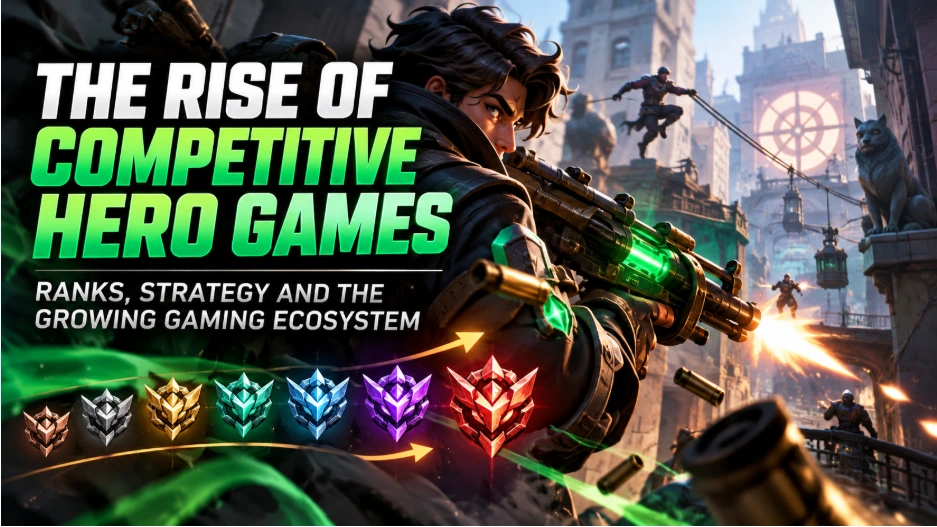
Competitive gaming has changed dramatically over the last few years. Players are no longer limited to traditional MOBAs or tactical shooters when they want a deep ranked experience. A new generation of hero-based games is combining character abilities, teamwork, mechanical skill, and competitive progression in ways that appeal to both casual and highly competitive players.
Two games that represent this evolution particularly well are Deadlock and Marvel Rivals.
Although they have very different settings and gameplay styles, both games are built around the same fundamental idea: players choose specialized characters, work with teammates, and compete through increasingly demanding levels of play.
Why Hero-Based Competitive Games Are So Popular
Hero-based games offer something that traditional competitive titles often struggle to provide: variety.
Instead of every player having access to essentially the same equipment, each character can have a unique combination of abilities, movement options, strengths, and weaknesses. This creates another layer of strategy beyond mechanical skill.
A player might have excellent aim but still struggle if they do not understand:
- Character matchups
- Team composition
- Map control
- Ability timing
- Objective priorities
- Positioning
- Economy or progression systems
- When to engage or disengage
This combination makes ranked hero games particularly difficult to master.
It also creates a progression system that keeps players returning. Reaching a new rank is not simply about winning more games; it often requires developing a deeper understanding of the game itself.
Deadlock Brings a Different Competitive Formula
Deadlock stands out because it combines elements that are normally associated with different genres.
Its gameplay mixes hero-based combat with third-person shooting and MOBA-style mechanics. Players have to think about combat while simultaneously managing objectives, lanes, resources, movement, and their team’s overall strategy.
That creates a relatively high skill ceiling.
A player who wants to improve in Deadlock has to develop several different abilities at once. Mechanical accuracy matters, but so does knowing when to rotate, where to position, how to use abilities, and how to create advantages for teammates.
This makes ranked progression particularly rewarding.
Players who want to reach higher levels of competitive play often spend considerable time learning individual heroes and understanding how different team compositions interact.
For players who are primarily interested in competitive progression, services such as Deadlock boosting can also become part of the wider gaming ecosystem, particularly for players who want assistance reaching specific ranked milestones.
Marvel Rivals Takes the Hero Shooter in Another Direction
Marvel Rivals approaches the same general concept from a more traditional hero-shooter perspective.
The game combines recognizable characters with team-based combat and objective-focused matches. Its roster is divided into different roles, creating opportunities for players to specialize while still requiring coordinated team play.
The ranked system adds another layer of competition.
As players progress through the ranks, mechanical mistakes become increasingly costly. Positioning, ultimate management, target selection, and team composition can determine whether a match turns into a comfortable victory or a difficult loss.
PlayXarena has previously covered the Marvel Rivals ranked system and its progression structure, including higher competitive tiers such as Grandmaster, Celestial, Eternity, and One Above All. PLAYXARENA
This demonstrates an important characteristic of modern competitive games: the game itself may be easy to understand, but mastering it is considerably harder.
The Importance of Ranked Progression
Ranked systems are one of the strongest reasons competitive games maintain long-term player engagement.
A visible rank gives players a measurable objective.
Instead of simply asking whether they are improving, players can look at their current rank and establish concrete goals:
Bronze → Silver → Gold → Platinum → Diamond → Elite ranks
The exact structure differs between games, but the psychological effect is similar.
Every successful session can bring a player closer to the next milestone.
However, ranked progression can also become frustrating. Losing several matches in a row can undo hours of progress, particularly when matchmaking produces difficult games or when teammates have very different levels of experience.
That is why many competitive players approach ranked gaming almost like a long-term project rather than something they simply play casually.
Mechanical Skill Is Only One Part of Winning
One of the biggest misconceptions about competitive gaming is that better aim automatically means a higher rank.
In reality, competitive hero games require a combination of skills.
1. Game Knowledge
Understanding abilities, cooldowns, counters, maps, and objectives can provide an enormous advantage.
2. Positioning
A mechanically talented player can still lose a fight by standing in the wrong location.
3. Communication
Calling targets, warning teammates about cooldowns, and coordinating attacks can completely change the outcome of a match.
4. Adaptability
A strategy that works in one match might fail completely against another team composition.
5. Mental Discipline
Competitive games involve losing. Players who become frustrated and immediately queue another match often make increasingly poor decisions.
Improvement therefore requires more than simply playing hundreds of games.
The Growing Competitive Gaming Ecosystem
The popularity of games such as Deadlock and Marvel Rivals is also contributing to a broader competitive gaming ecosystem.
Around successful competitive games, players can find:
- Tournament platforms
- Statistics websites
- Coaching and educational content
- Gaming communities
- Streaming platforms
- Hardware designed for competitive play
- Performance optimization tools
- Rank progression services
This ecosystem exists because players increasingly treat games as competitive hobbies rather than occasional entertainment.
A player might spend one evening practicing mechanics, another studying a new character, and another watching high-level gameplay to understand how experienced players approach the same situations.
That level of engagement creates opportunities for businesses that support competitive players.
For players who want to reach specific competitive milestones, Marvel Rivals boosting is another topic within the game’s ranked progression ecosystem. Players exploring this option should consider the service provider’s reputation, account security, and the game’s current rules before making a decision. However, improving game knowledge, teamwork, positioning, and hero selection remains valuable for long-term competitive development.
Choosing Between Deadlock and Marvel Rivals
The two games appeal to slightly different types of competitive players.
Deadlock is particularly interesting for players who enjoy combining shooting mechanics with strategic lane management, character abilities, and MOBA-style decision-making.
Marvel Rivals, meanwhile, is a strong choice for players who prefer fast-paced hero-shooter combat, recognizable characters, team compositions, and objective-based battles.
Neither approach is necessarily better.
The choice ultimately comes down to the type of competitive experience a player enjoys.
Some players want the complexity of managing multiple strategic systems simultaneously, while others prefer the faster combat loop of a hero shooter.
How to Improve Your Ranked Performance
Regardless of which game you choose, several principles apply to almost every competitive title.
Focus on a Small Character Pool
Trying to master every character simultaneously usually slows progression.
Choose a few characters that fit your preferred role and learn their strengths and weaknesses thoroughly.
Review Your Mistakes
Instead of only watching successful games, look at losses.
Ask yourself:
- Why did I die?
- Was I positioned correctly?
- Did I use my ultimate too early?
- Did I ignore an objective?
- Could I have helped a teammate?
- Did I take a fight that wasn’t necessary?
Small improvements repeated over dozens of games can have a significant impact.
Prioritize Objectives
Kills are exciting, but competitive games are generally won by completing objectives.
A player with fewer eliminations can still be extremely valuable if they consistently create space, protect teammates, secure objectives, or force opponents away from important areas.
Avoid Tilt
Perhaps the most underrated competitive skill is knowing when to stop playing.
If frustration is affecting decision-making, taking a break can be more valuable than immediately starting another ranked match.
The Future of Competitive Hero Games
The continued popularity of games such as Deadlock and Marvel Rivals demonstrates that competitive gaming is moving beyond traditional genre boundaries.
Players increasingly expect games to offer:
- Deep progression systems
- Unique characters
- Competitive rankings
- Frequent updates
- Social features
- Esports potential
- Long-term mastery
This creates a competitive environment where simply understanding the basic mechanics is no longer enough.
Players who want to climb need to continuously adapt to new characters, balance changes, strategies, and evolving metas.
That constant evolution is ultimately what keeps competitive games interesting.
Final Thoughts
Deadlock and Marvel Rivals represent two different approaches to modern hero-based competitive gaming.
Deadlock combines shooter mechanics with strategic systems traditionally associated with MOBAs, while Marvel Rivals focuses on fast-paced team combat built around a diverse hero roster.
Both demonstrate why ranked gaming continues to attract dedicated players: there is always another rank to reach, another character to master, and another strategy to learn.
As competitive gaming continues to grow, the ecosystem surrounding these games will likely grow alongside it, giving players more tools and services to help them enjoy and progress through their favorite titles.
