

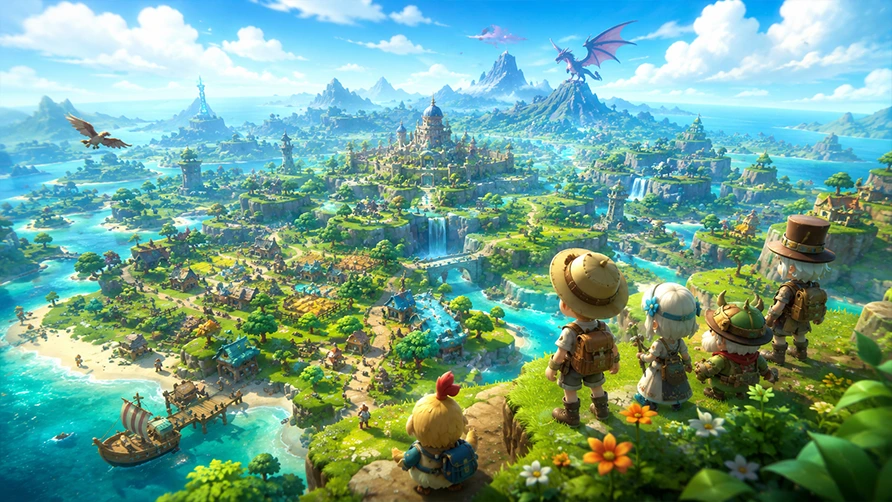
Eleven years is a long time to wait for a sequel. But for fans of the original Fantasy Life on the Nintendo 3DS a sleeper cult classic that blended life simulation with JRPG adventure in a way no other game quite matched the arrival of Fantasy Life i The Girl Who Steals Time on May 21, 2025 felt less like a release and more like a reunion. Level-5 delivered not just a worthy follow-up, but arguably the defining entry in what is shaping up to be one of gaming’s most charming and underappreciated franchises.
What Is Fantasy Life i? The Basics for New Players
Fantasy Life i The Girl Who Steals Time is a Slow-Life RPG developed and published by Level-5 the Japanese studio behind franchises like Ni No Kuni, Professor Layton, and Yo-kai Watch. It is the long-awaited direct sequel to Fantasy Life (Nintendo 3DS, 2012 in Japan / 2014 in the West).
At its core, this is a game about living a life of your choosing inside a colorful fantasy world. You’re not locked into a single character class or story path. Instead, the game gives you 14 distinct Lives the game’s term for jobs or classes spanning combat, crafting, and gathering. You can be a Paladin one hour, a Fisher the next, and then switch into Blacksmith mode to forge the weapon you just gathered materials for. The loop is seamless, interconnected, and almost hypnotically satisfying.
The game has been compared to everything from Animal Crossing and Stardew Valley to Rune Factory and even a single-player MMO and all of those comparisons capture something true about it, even if none of them fully defines it. Fantasy Life i is something genuinely its own: a mini single-player MMO where the grind feels like fun rather than obligation.
Quick Verdict
Fantasy Life i: The Girl Who Steals Time is one of the most joyful and content-rich RPGs released in years. It earns its glowing Steam rating (94% Positive across 13,000+ reviews) and its Metacritic score of 86 through genuine depth, not through hype. The Life system is endlessly rewarding, the world is gorgeous and layered, and the free Snoozaland DLC added in December 2025 gives players hundreds of additional hours of meaningful endgame content.
Its weaknesses a light story, limited co-op scope, and a learning curve front-loaded with tutorials are real but minor compared to what the game gets right. If you enjoy cozy life sims, JRPGs, island-building games, or simply games that respect your time by always giving you something worth doing, this one belongs in your library.
Score: 8.5 / 10
Story: Time Travel, a Ruined Island, and a Dragon Made of Bone
You are an adventurer who sets sail with archaeologist Edward and his team. Following a mysterious light emanating from a dragon’s fossil, you discover an uncharted, deserted island. A vast abyss, a dragon made of bone, and a girl’s message that begs you to save the world that’s the hook. You’ll travel between the island as it thrived 1,000 years ago and its ruined present-day state, unraveling the mystery of its downfall while gradually rebuilding what was lost.
The game’s narrative premise is genuinely compelling. Time travel is a classic setup, but Fantasy Life i uses it cleverly: the contrast between the vibrant, thriving past and the crumbled present gives every discovery emotional weight. The ancient princess Rem is the heart of the story, and your bond with her and with your dragon companion provides the emotional through-line across an otherwise episodic series of chapters.
That said, the story is widely acknowledged to be one of the game’s weaker elements. The narrative is hit-and-miss, with a captivating premise that develops into a rapidly paced series of highlights with loose connectivity. Every new major location brings eccentric characters with some humorous moments, but the actual plot progression can feel aimless. The dialogue is delivered with repetitive stock voice lines that don’t always match what the text boxes say a quirk that starts charming and eventually becomes slightly irritating.
For players who care primarily about story: Fantasy Life i is light and whimsical, not particularly deep. But the world and the characters within it have a personality and warmth that carry you through even the thinner narrative stretches. And if you’re the type who skips cutscenes and dives straight into gameplay loops, this game is paradise the story is scaffolding rather than the building itself.
The Life System: 14 Jobs That Actually Feel Different
This is where Fantasy Life i earns everything. The 14 Lives (jobs/classes) are the game’s beating heart, and Level-5 has built them with genuine care. They fall into three categories:
Combat Lives
- Paladin — Longsword and shield; the defensive stalwart
- Mercenary — Greatsword; powerful and aggressive
- Hunter — Bow and arrow; ranged combat with charge skills
- Magician — Magic-based combat with elemental attacks
Gathering Lives
- Miner — Excavate ores and minerals; excellent early money-making
- Woodcutter — Harvest lumber and timber; feeds into crafting Lives
- Fisher — Fishing with rhythm-game timing mechanics
- Farmer — Grow crops and cultivate plants (unlocked via story progression)
Crafting Lives
- Blacksmith — Forge weapons and tools from gathered materials
- Carpenter — Build furniture and structures for your island
- Cook — Create consumables and healing dishes from ingredients
- Tailor — Craft clothing and cosmetic gear
- Alchemist — Mix rare materials into special items and compounds
- Artist — Create decorative objects and artworks (unlocked via story)
What makes this system click is how the Lives interlock. A Miner feeds a Blacksmith. A Farmer feeds a Cook. A Woodcutter feeds a Carpenter. The game gently nudges you toward trying everything rather than specializing, because real progression often requires switching Lives to gather what your current project demands. The result is a game that stays fresh across dozens of hours because you’re rarely doing the same thing twice.
Switching between Lives is instant there’s a Quick Life Change feature that swaps your equipment and skillset on the fly. This eliminates the frustration of having to trek back to town every time you want to change roles, and it fundamentally shapes how you think about exploration. Walking through a forest, you might switch to Woodcutter to grab lumber, then Fisher to catch dinner by the river, then switch back to your main combat Life when you spot enemies nearby. It flows beautifully.
Combat across all fighting Lives is described as simplistic by most reviewers a point worth acknowledging. You’ll unlock different moves for each Life, but battles largely involve cycling through a small number of skills with satisfying animations. Bosses add a layer of challenge that tests your build and reaction time, but regular enemies are comfortably manageable. This is by design: Fantasy Life i is not a demanding action game. Its combat serves the cozy loop rather than demanding mastery.
The World: Multiple Islands, Time Periods, and One Giant Open Continent
Fantasy Life i doesn’t give you one world. It gives you several, and each reveals itself in a way that continuously expands what you thought the game was.
You begin on the ruined present-day island, slowly getting your bearings. Then you’re transported 1,000 years into the past, where the same island is a thriving kingdom. The contrast is jarring in the best way. Then, as you fight bosses and rescue characters, you gain access to Ginormosia the largest continent in series history, made up of 15 distinct regions with their own enemies, resources, bosses, and gathering nodes.
By the time the rug-pulls have all landed life sim morphs into top-down adventure, morphs into town builder, morphs into open-world RPG you realize Fantasy Life i has been quietly building a staggering amount of content beneath its charming exterior. As one reviewer put it: “by the time I got used to that loop, I was whisked through another portal and dropped onto an entire other island where the entire ebb and flow of the game completely changed.”
The open-world traversal in Ginormosia is a genuine upgrade from the 3DS original. You can climb ledges, swim across rivers and lakes, and ride mounts to cover ground quickly. The largest continent in Fantasy Life history rewards curiosity secrets, rare materials, powerful enemies, and hidden shrines are scattered across all 15 regions.
How long does it take to beat Fantasy Life i?
- Main Story: approximately 34 hours
- Main Story + Side Content: approximately 59 hours
- Full Completionist run: approximately 135 hours
That’s before accounting for the Snoozaland DLC added in December 2025, which easily adds hundreds more hours of meaningful endgame content.
Island Building and Town Customization
One of Fantasy Life i’s most pleasant surprises is its island building system. Using the materials gathered through your various Lives, you can literally reshape the island: alter the landscape, draw rivers and roads, place buildings, expand your home base, and furnish the interior of your house however you like.
This isn’t Animal Crossing-lite cosmetic decoration. The island building connects directly to the game’s economy and progression. Rescuing characters called Strangelings (NPCs transformed by an in-game curse) populates your island with people who provide services, sell items, and contribute to the community. Building a thriving settlement becomes a satisfying parallel track to the main RPG adventure.
The game lets you place houses and objects, but you can also alter the landscape by drawing rivers and roads to create a truly unique island a feature that gives it more creative depth than many dedicated city-builders.
Multiplayer: Great in Theory, Limited in Practice
Fantasy Life i supports multiplayer with up to four players, and the concept is genuinely appealing: invite friends to your island, explore dungeons together, share resources, and fight bosses as a group.
In practice, the multiplayer has meaningful limitations that reviewers consistently flag. You aren’t able to fully progress quests together, and certain activities in your custom settlement are restricted in co-op. In the open world, if you go gather materials and fight bosses together, sessions are capped at 30 minutes. This is a game where co-op progress is constantly gated or held up, making it impossible to lose hours with a friend the way you can alone.
That said, multiplayer isn’t useless it’s functional for gathering runs and boss fights. But if you’re buying this primarily as a co-op experience, temper your expectations. The game is masterfully designed as a solo experience that happens to support multiplayer, not the other way around.
Local co-op via the 2-Player Family Co-op feature is a highlight: with two controllers, a second player can join your adventure as a companion without needing their own online account, making it an accessible shared experience for families or couch co-op sessions.
Visuals and Music
The presentation is a significant upgrade over the 3DS original. The chibi-style character designs and vibrant color palette translate beautifully to modern hardware. The world pops with personality from lush green forests to golden desert wastes to the eerily familiar ruins of the present-day island.
The Nintendo Switch 2 version (released June 5, 2025, on the console’s launch day) adds higher resolution, better graphics, and faster load times making it the definitive version for Switch owners who upgrade.
The soundtrack is excellent. It’s upbeat without being intrusive, and captures the “late afternoon energy” of a cozy RPG the kind of music that plays in the background of productive hours rather than demanding your attention. It’s one of the best game soundtracks of 2025 in the cozy genre.
Pros and Cons at a Glance
What Fantasy Life i Gets Right:
- 14 Lives that feel genuinely distinct and interconnected
- Enormous content volume easily 100+ hours before DLC
- Layered world design that keeps revealing new gameplay modes
- Seamless, satisfying crafting and gathering loop
- Island building system adds real creative depth
- Free Version 2.0 DLC (Snoozaland) provides deep endgame content
- Cross-play and cross-save across all platforms
- Stunning visual upgrade over the 3DS original
- Excellent music
- Accessible to newcomers; rewarding for veterans
Where It Falls Short:
- Story is light and the pacing can feel aimless in the middle chapters
- Voice acting includes repetitive stock lines that don’t match text
- Multiplayer is gated and time-limited in ways that frustrate
- Heavy tutorial front-load in the early hours
- Some grinding required for rare materials in late-game crafting
- No physical release in Western regions at launch
The Snoozaland DLC (Version 2.0) A Free Expansion That Changes Everything
Released on December 24, 2025, the free Version 2.0 update titled “The Sinister Broker Bazario’s Schemes” is one of the most substantial free updates to any game in 2025. It adds an entire new mode, Snoozaland, a roguelike open-world dream realm accessible via a suspicious tent in your Base Camp (unlocked after Chapter 3 of the main story).
Snoozaland completely flips Fantasy Life i’s usual formula. Every run starts at Level 1, stripped of your gear, money, and items. You’re dropped into a procedurally shifting dream world and must gather, craft, and survive from scratch. The run ends when you choose but any Dream Points (DP) you haven’t spent at Dark Don’s Shop before ending your run are lost forever, creating a constant risk-versus-reward tension that’s completely unlike the relaxed main game.
What makes Snoozaland remarkable is how it connects to the main game. The rewards you bring back rare crafting materials, exclusive cosmetics, powerful mounts, and access to the new Polishing system permanently strengthen your main adventure. Polishing allows Blacksmiths, Carpenters, and Alchemists to enhance their best tools beyond normal limits, including a chance to start any action with your Special Skill gauge instantly maxed. This creates a meaningful progression loop that turns Snoozaland from an optional side mode into the game’s essential endgame activity for dedicated players.
Version 2.0 also added five new mounts, new items, weapons, customization options, a higher damage cap, an increased number of homes you can build at Base Camp, and dozens of quality-of-life improvements. For a free update, it’s an extraordinary amount of content and it signals that Level-5 is committed to supporting Fantasy Life i long-term.
How Does Fantasy Life i Compare to Similar Games?
vs. Stardew Valley: Both are cozy life-sims with crafting loops and character progression, but Fantasy Life i leans far more heavily into RPG combat and a structured story. Stardew is about tending a farm; Fantasy Life i is about living an entire adventuring life. They scratch different itches.
vs. Animal Crossing: New Horizons: Animal Crossing is more purely about the creative sandbox and daily-life rhythm. Fantasy Life i is significantly more content-dense, with more combat, more story, and a more explicit progression system. AC players who want more RPG depth will find Fantasy Life i deeply satisfying.
vs. Rune Factory: This is probably the closest comparison. Both blend life-sim with RPG action, both have crafting/farming/combat in one package. Fantasy Life i has a more expansive Job system and a more complex world, while Rune Factory leans more heavily into town relationships and dating mechanics. Both are excellent.
vs. the Original Fantasy Life (3DS): Fantasy Life i surpasses its predecessor in almost every way more Lives, bigger worlds, more gameplay modes, better graphics, multiplayer, and cross-save. The original still has a special charm, but this is the definitive Fantasy Life experience.
Should You Buy Fantasy Life i? Platform Recommendations
Nintendo Switch 2: The best version. Higher resolution, better performance, faster loads. If you own a Switch 2, this is the version to get.
PC (Steam): Excellent option with very positive user reviews. If you experienced lag or frame issues at launch on PC, it’s worth noting that performance optimization guides are available the Fortnite lag fix for low-end PCs guide at PlayXArena covers Performance Mode tweaks that apply to many modern UE-based titles on budget hardware, and similar principles apply here.
PlayStation 5 / Xbox Series X|S: Solid versions with good performance. No notable platform-specific issues reported by reviewers.
Nintendo Switch (original): Playable and still enjoyable, though the performance gap with the Switch 2 version is noticeable. The game’s enormous world can occasionally show seams on original Switch hardware.
Cross-save and cross-play are supported across all platforms, so you can start on Switch and continue on PC or PlayStation without losing progress.
Critic Scores Summary
| Source | Score |
|---|---|
| Metacritic | 86/100 |
| OpenCritic | 85/100 |
| Steam User Reviews | 94% Very Positive |
| GamesHub | 9/10 |
| TheSixthAxis | 9/10 |
| DualShockers | 8.5/10 |
| Noisy Pixel | 8/10 |
| Gaming Respawn | 6/10 |
Frequently Asked Questions
Is Fantasy Life i a sequel or a remake?
It’s a fully standalone sequel to the 2012 Nintendo 3DS game Fantasy Life. You don’t need to have played the original to enjoy it the new game introduces its own world, story, and characters.
Is Fantasy Life i good for beginners?
Yes. The game is rated Everyone 10+ and is designed to be accessible. The early hours include a lot of tutorial content, but the core gameplay loop is intuitive. It’s a great entry point for the cozy RPG genre.
Does Fantasy Life i have DLC?
Yes. The first major DLC, “The Sinister Broker Bazario’s Schemes” (Snoozaland), was released for free on December 24, 2025 as part of the Version 2.0 update. A second DLC, “Update the World,” has been announced but does not yet have a confirmed release window.
How many hours does Fantasy Life i take?
The main story takes approximately 34 hours. Adding side content brings this to around 59 hours. Completionists can expect around 135 hours before DLC. With Snoozaland included, dedicated players can easily push into 200+ hours.
Can you play Fantasy Life i with friends?
Yes, up to 4 players can play online together. Local co-op for 2 players is also available without needing a second online account. However, multiplayer has session time limits and quest restrictions it’s not a full co-op experience.
Final Verdict
Fantasy Life i: The Girl Who Steals Time is everything the original’s fans hoped for and something new players will find astonishing. Level-5 took eleven years to follow up on a cult classic, and the result is a game that validates every year of that wait. Its story is light, its combat is simple, and its multiplayer could be more generous but these are the caveats of a game that succeeds so comprehensively in so many other areas that they feel like complaints about a perfect meal because the napkin was cloth instead of linen.
This is one of the best JRPGs of 2025, a worthy game-of-the-year contender, and a genuine landmark for the cozy RPG genre. Whether you have 40 hours to spend or 400, Fantasy Life i will find a way to fill them and you’ll be grateful it did.
