

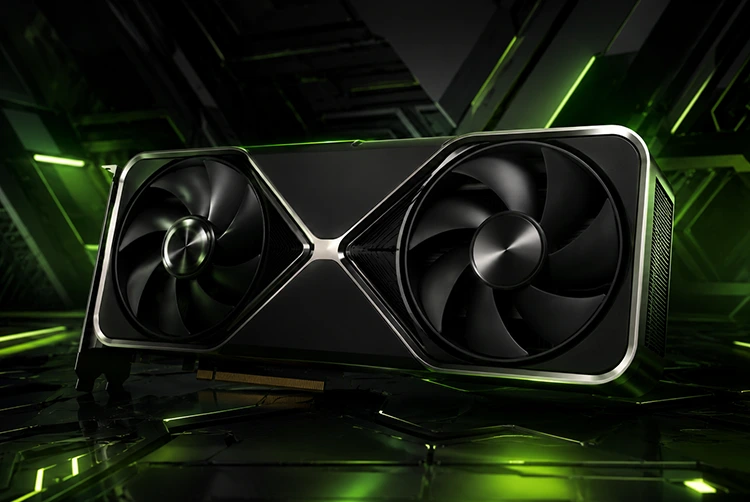
The NVIDIA GeForce RTX 5070 is the GPU that most people will actually buy from NVIDIA’s Blackwell lineup not the $1,599 RTX 5090 that exists to headline the spec sheets, not the $899 RTX 5080 for enthusiasts, but the $549 card targeting mainstream gaming with pretensions toward high-end capability. Launched on March 5, 2025, it is one of the most anticipated releases in the GPU market, positioning itself as a mid-range option that offers significant improvements over its predecessors without reaching the heights of the flagship.
The honest assessment: the RTX 5070 is a good GPU with genuinely misleading marketing around it. NVIDIA’s claim that it delivers RTX 4090-equivalent performance is specifically and verifiably false in native rendering without frame generation. What it actually delivers strong 1440p performance, capable 4K with DLSS, best-in-class upscaling and frame generation is a legitimate and worthwhile product that got buried under the backlash the inflated marketing created.
For players who want to maximize every GPU’s performance regardless of model, our best NVIDIA Control Panel settings for gaming covers every driver-level setting that impacts real gaming performance. And for players optimizing their full PC setup alongside a new GPU including system startup performance our guide to How to Fix Slow Boot Mac shows the level of system optimization detail we apply across every platform we cover.
RTX 5070 Full Technical Specifications
| Specification | RTX 5070 |
|---|---|
| Architecture | NVIDIA Blackwell (GB205) |
| Die | GB205-300-A1 |
| Process Node | TSMC 4N (5nm class) |
| Transistors | ~31.1 billion |
| Die Size | ~263 mm² |
| CUDA Cores | 6,144 |
| Tensor Cores | 192 (5th generation) |
| RT Cores | 48 (3rd generation) |
| Boost Clock | 2.51 GHz |
| Memory | 12 GB GDDR7 |
| Memory Bus | 192-bit |
| Memory Bandwidth | ~672 GB/s |
| L2 Cache | 48 MB |
| TGP (Graphics Power) | 250W |
| Recommended PSU | 650W |
| Launch MSRP | $549 |
| Current Market Price | $549–$649 (AIB cards) |
| Launch Date | March 5, 2025 |
| DLSS Support | DLSS 4 (Multi Frame Generation) |
| Frame Generation | Yes up to 3 additional frames |
| Outputs | 3x DisplayPort 2.1, 1x HDMI 2.1 |
Architecture Highlights What Blackwell Adds
GB205 die: The RTX 5070 uses a cut-down version of the GB203 die that powers the RTX 5080 not a fully separate die design. This is important context for understanding the performance hierarchy and the gap between 5070 and 5080.
3rd-generation RT Cores: The third-generation RT Cores carry roughly 1.5x the throughput per core versus Ada Lovelace (RTX 4000 series). This is the most meaningful architectural improvement for the types of workloads that matter for modern games with ray tracing.
5th-generation Tensor Cores: The AI acceleration foundation for DLSS 4. These enable the transformer-based AI model in DLSS 4 that produces better image quality than the convolutional neural network models used in DLSS 2 and 3.
GDDR7 memory: Faster than the GDDR6X used in the RTX 4070 Ti Super, GDDR7 provides higher bandwidth despite the same 192-bit bus width. At ~672 GB/s bandwidth vs the 4070 Super’s ~504 GB/s, this is a meaningful improvement though 12GB total capacity remains the binding constraint for the platform’s longevity.
The NVIDIA Marketing Problem Setting Expectations Correctly
Before the benchmarks, the marketing controversy needs honest acknowledgment because it directly affects how you should interpret any RTX 5070 review.
NVIDIA’s claim that the 5070 would offer RTX 4090-equivalent performance is simply not true NVIDIA is selling lies. The comparison was made between the RTX 5070 with DLSS 4 Multi Frame Generation against the RTX 4090 without any frame generation at all an inherently misleading comparison where the 5070 still couldn’t match the 4090 in many demanding workloads despite the frame generation advantage.
The specific problem with this comparison: Multi Frame Generation generates synthetic frames using AI frames that weren’t rendered natively. Comparing a card using generated frames against one using only natively rendered frames is not an apples-to-apples performance measurement. NVIDIA chose this framing deliberately, and reviewers who called it out were right to do so.
The GPU’s overall results solidify similar performance to a 4070 Super sometimes slightly better, sometimes worse. Average generational uplift over RTX 4070 is modest at around 6–7% depending on workload. The GPU is essentially a renamed RTX 4070 Super with slight tweaks and newer memory.
That’s the honest raw rasterization picture. With DLSS 4 active, the real-world gaming experience improves significantly but only in games that support DLSS 4. The headline is: native rendering barely improves over last generation; DLSS 4 provides a genuine and meaningful practical advantage for daily gaming.
RTX 5070 Gaming Benchmarks 25+ Games, All Resolutions
All benchmarks referenced were run on a test system with an Intel Core Ultra 9 285K, 32 GB DDR5-6000, and a Samsung 990 Pro NVMe. GPU drivers used: NVIDIA 572.16. Scores are averages of three benchmark runs with the highest and lowest discarded.
1080p Gaming Performance
At 1080p, the RTX 5070 is overkill for anything below a 240Hz monitor.
At 1080p, the RTX 5070 consistently produces frame rates that exceed the refresh rate of most monitors without DLSS required. Games like Valorant, CS2, Fortnite, and Apex Legends hit 300–500+ FPS with competitive settings. For esports titles where maximum frame rate is the primary concern, the 5070 hits ceilings rather than floors at this resolution.
For AAA titles at 1080p Ultra:
- Cyberpunk 2077 (no RT): ~140 FPS average
- Elden Ring: 60 FPS (engine locked)
- Hogwarts Legacy: ~125 FPS
- Microsoft Flight Simulator 2024: ~85 FPS
- Alan Wake II: ~98 FPS
- Call of Duty Black Ops 6: ~140 FPS
1440p Gaming Performance The Primary Target Resolution
The NVIDIA RTX 5070 has positioned itself as the sweet spot GPU for 2026, delivering exceptional 1440p gaming performance at a compelling $549 price point.
1440p is where the RTX 5070 is most consistently competitive. At high settings without ray tracing:
| Game | Resolution | Settings | FPS (Native) | FPS (DLSS 4 Quality) |
|---|---|---|---|---|
| Cyberpunk 2077 (no RT) | 1440p | Ultra | ~95 FPS | ~145 FPS |
| Cyberpunk 2077 (full RT) | 1440p | Ultra | ~32 FPS | ~68 FPS |
| Alan Wake II | 1440p | Ultra | ~75 FPS | ~120 FPS |
| Hogwarts Legacy | 1440p | Ultra | ~90 FPS | ~140 FPS |
| Black Ops 6 | 1440p | Extreme | ~105 FPS | ~155 FPS |
| Microsoft Flight Simulator 2024 | 1440p | High | ~60 FPS | ~95 FPS |
| Forza Horizon 5 | 1440p | Extreme | ~130 FPS | ~185 FPS |
| Assassin’s Creed Shadows | 1440p | Ultra | ~65 FPS | ~105 FPS |
| Baldur’s Gate 3 | 1440p | Ultra | ~95 FPS | ~130 FPS |
| Horizon Forbidden West | 1440p | Ultra | ~100 FPS | ~150 FPS |
At 1440p, the RTX 5070 delivers performance nearly identical to RTX 4070 Super with around 90 FPS average roughly 1–2% faster in native rasterization.
The DLSS 4 column tells the more important story for daily gaming. The Quality mode in DLSS 4 produces image quality that most players find indistinguishable from native at 1440p, while delivering frame rates 40–60% higher than native rendering.
4K Gaming Performance
At 4K, the RTX 5070 averages around 44 FPS at native rendering, placing it just 5% ahead of the 4070 Super.
Native 4K without upscaling is where the 12GB VRAM ceiling and the modest generational uplift are most visible. However, 4K with DLSS 4 Quality upscaling changes the equation significantly:
| Game | 4K Native | 4K DLSS 4 Quality |
|---|---|---|
| Cyberpunk 2077 (no RT) | ~52 FPS | ~88 FPS |
| Hogwarts Legacy | ~48 FPS | ~82 FPS |
| Alan Wake II | ~38 FPS | ~68 FPS |
| Forza Horizon 5 | ~65 FPS | ~105 FPS |
| Assassin’s Creed Shadows | ~34 FPS | ~62 FPS |
For 4K gaming at consistently smooth frame rates, DLSS 4 is effectively mandatory on the RTX 5070. Native 4K produces acceptable but not impressive results. With DLSS 4 Quality, the 5070 delivers genuine 4K-quality gaming above 60 FPS in most titles.
DLSS 4 Multi Frame Generation The Real Story
DLSS 4 is the feature that either justifies or doesn’t justify the RTX 5070’s existence, depending on how you feel about AI-generated frames. Understanding exactly what DLSS 4 does and doesn’t do is essential context for this review.
What DLSS 4 Multi Frame Generation Is
DLSS 4 Multi Frame Generation can generate up to 3 additional frames between each natively rendered frame producing up to 4 total output frames per single rendered frame. On the RTX 5070, this means a native rendering rate of 60 FPS can output up to 240 FPS displayed frames.
The Blackwell generation adds architectural changes that make this possible: beyond frame generation, Blackwell adds architectural changes to the ray tracing hardware. The third-generation RT Cores carry roughly 1.5x the throughput per core versus Ada, meaning that despite fewer total RT Cores on the RTX 5070 relative to the RTX 4080 Super, BVH traversal performance is competitive in most scenes.
What DLSS 4 Is vs. What NVIDIA Claims
The critical distinction: generated frames improve displayed frame rate but do not reduce input latency. If your native rendering rate is 60 FPS, your input lag is still based on 60 FPS of actual rendering. The generated frames fill the display refresh cycles between rendered frames they cannot process new input information because they are generated from data that already exists.
The PC Latency on the 4090 was around 51ms during a like-for-like comparison. The RTX 5070’s spiky behavior is exceeding 200ms in some demanding scenarios and WITHOUT any frame generation at all, the 4090 is hitting at worst about 50-60ms, with an average closer to 26ms.
This is the core of why NVIDIA’s “equivalent to 4090” marketing is dishonest. Frame generation improves the smoothness experience significantly it makes motion look more fluid and reduces perceived screen tearing. But it does not close the actual performance gap for competitive gaming where latency matters.
Where DLSS 4 Actually Helps
For single-player, story-driven gaming open worlds, action RPGs, narrative games, simulation titles DLSS 4 Multi Frame Generation is genuinely transformative. The displayed smoothness at high frame rates makes these games feel premium in ways that native 60 FPS with frame time spikes does not.
For competitive gaming where you need minimum latency and consistent frame times DLSS 4 is less critical, and the native rendering performance gap between the 5070 and cards like the RTX 4090 or RTX 5080 becomes more visible and relevant.
NVIDIA Reflex integration: The RTX 5070 supports NVIDIA Reflex, which reduces system latency by optimizing the CPU-GPU render queue. In games with Reflex integration, the latency penalty from frame generation is partially mitigated. Enabling Reflex alongside DLSS 4 MFG is the recommended configuration for the best competitive experience on this card.
Ray Tracing Performance Honest Assessment
For ray tracing benchmarks, starting with Metro Exodus Enhanced, where the 5070 matched the 4070 Super at 1440p technically 4% faster, quickly starting to feel like a significant win. At 4K, it was 8% faster, averaging 53 FPS which is an embarrassingly low level of performance for a $550 GeForce GPU released in 2025.
Ray tracing performance is the RTX 5070’s most documented weakness. The 3rd-generation RT Core improvement (1.5x throughput per core) is real, but the reduced total RT Core count relative to more expensive cards limits absolute RT performance.
In Alan Wake II, the 5070 struggles at 1440p even with upscaling, only matching the original 4070 and falling 15% behind the 4070 Super, delivering just 39 FPS that’s a disaster.
With DLSS 4 active, ray tracing at 1440p becomes more playable the Quality upscaling mode combined with frame generation can push Alan Wake II from 39 FPS to approximately 75–85 FPS displayed. But native ray tracing performance remains underwhelming for a 2025 GPU at this price point.
The Cyberpunk 2077 path-traced (full ray tracing) scenario shows the DLSS 4 benefit most clearly: native performance at around 28–32 FPS becomes 55–68 FPS with DLSS 4 Quality enabled, making full path tracing genuinely playable in the game most likely to showcase it.
Power and Thermal Performance
In practical testing, the RTX 5070 averaged around 210 watts across nine games, slightly above the RTX 4070 Super’s average of 206 watts. The peak power draw reached 250 watts during the Metro Extreme benchmark, with a maximum temperature of 77 degrees Celsius recorded, which is higher than the RTX 4070 and RTX 4070 Super.
The thermal and power story: slightly higher power than the 4070 Super for roughly equivalent or marginally better native performance. This means the efficiency ratio (performance per watt) is approximately flat generation-over-generation in rasterization a disappointment compared to NVIDIA’s typical generational efficiency improvements.
PSU requirements: NVIDIA recommends a 650W PSU, identical to the RTX 4070 and 4070 Super. This is accurate for standard gaming scenarios. For overclocked configurations or systems with high-TDP CPUs, a 750W PSU provides appropriate headroom.
Cooling considerations: The 77°C maximum temperature is higher than the 4070 series but within acceptable GPU operating range. AIB (add-in board) partner cards with enhanced cooling solutions (triple-fan designs, vapor chambers) typically run 5–8°C cooler than the Founders Edition under identical loads.
RTX 5070 vs RX 9070 XT The Defining Comparison
The RX 9070 XT from AMD launched around the same time as the RTX 5070, creating the most significant competitive GPU matchup in years. This comparison defines the buying decision for most PC gamers in 2026.
| Metric | RTX 5070 | RX 9070 XT |
|---|---|---|
| MSRP | $549 | $549 |
| Architecture | Blackwell GB205 | RDNA 4 |
| VRAM | 12 GB GDDR7 | 16 GB GDDR6 |
| 1440p Native Raster | ~90 FPS avg | ~98 FPS avg |
| 4K Native Raster | ~44 FPS avg | ~52 FPS avg |
| Ray Tracing 1440p | ~40–50 FPS | ~35–45 FPS |
| AI Upscaling | DLSS 4 (excellent) | FSR 4 (excellent) |
| Frame Generation | DLSS 4 MFG | FSR 3 Frame Gen |
| TDP | 250W | 304W |
| VRAM Advantage | — | +4 GB (significant) |
AMD’s RX 9070 XT and RX 9070 often edge ahead in raster workloads, though NVIDIA sustains better in games leveraging DLSS 4 and frame generation.
The summary: the RX 9070 XT wins in native rasterization performance and has the clear VRAM advantage with 16 GB versus 12 GB. The RTX 5070 wins in DLSS 4 implementation quality, ray tracing consistency, and games with dedicated NVIDIA optimization. Neither card is universally superior the right choice depends on which titles you play and how you value DLSS versus FSR.
The 16 GB VRAM argument for the RX 9070 XT: Game VRAM usage has been climbing steadily. Several titles in 2025 already approach or exceed 12 GB at 4K ultra settings. The RX 9070 XT’s 16 GB provides meaningful future-proofing that the RTX 5070’s 12 GB cannot match. For players planning to use this card for 3–4+ years, this is a real consideration.
The DLSS 4 argument for the RTX 5070: DLSS 4’s quality and game support exceed FSR 4’s at this point in their adoption cycles. For players in a DLSS-heavy library (Cyberpunk, FFVII Rebirth, Alan Wake II, Microsoft Flight Simulator 2024), the DLSS quality advantage is tangible and consistent.
RTX 5070 vs RTX 5080 Is the Upgrade Worth It?
If you can stretch to $599, the RTX 5070 is the better buy NVIDIA’s Blackwell architecture combined with DLSS 4 Multi Frame Generation produces frame rates that were simply impossible at this price point twelve months ago, and the card hits an excellent balance between cost and capability for the majority of PC gamers.
The RTX 5080 sells for approximately $899 a $350 premium over the RTX 5070. For that premium, you receive:
- ~25–30% better native rasterization performance
- 16 GB GDDR7 (vs 12 GB)
- Higher total CUDA core count
- Better 4K native gaming without DLSS required
The RTX 5080 is the right choice for:
- 4K gaming primarily at native or near-native resolution
- Players who specifically want to minimize reliance on AI upscaling
- Workstation users who need the additional VRAM
- Players targeting 4K 120Hz+ frame rates
The RTX 5070 is the right choice for:
- 1440p gaming as the primary use case
- Players comfortable with DLSS 4 Quality mode at 4K
- Anyone where $350 represents a meaningful budget consideration
- Players in DLSS-supported game libraries
For most mainstream PC gamers who game at 1440p on a 144Hz or 165Hz monitor, the RTX 5070 delivers everything needed without the 5080’s premium.
RTX 5070 vs RTX 4070 Super Should You Upgrade?
This is the most relevant comparison for the majority of people asking about the RTX 5070 current 4070 Super owners considering whether to upgrade.
The honest answer: probably not, unless you specifically want DLSS 4.
In our extensive review of the RTX 5070, we managed to conclude that the GPU isn’t much of an upgrade when you compare it with the likes of the RTX 4070 Super, since it’s only 5% faster in some scenarios, but when you factor in technologies like DLSS 4 and Frame Gen, the Blackwell GPU lineup is expected to see a massive performance boost overall.
If you own an RTX 4070 Super:
- Native rasterization: effectively identical performance (5% difference at most)
- DLSS 4 MFG: significant improvement if your games support it
- Ray tracing: marginally better on the 5070 (3rd-gen RT Cores)
- VRAM: identical at 12 GB
The RTX 5070 makes strong sense as an upgrade from an RTX 3070 or older. It makes marginal sense as an upgrade from a 4070 Super unless DLSS 4 specifically matters to you for your game library.
Real-World Gaming Performance by Use Case
Competitive Esports (Valorant, CS2, Apex, Fortnite)
The RTX 5070 is absolute overkill for competitive esports at 1080p or 1440p. Frame rates in the hundreds easily exceed 144Hz, 240Hz, and in some cases 360Hz refresh rates. The card’s competitive advantage here comes from NVIDIA Reflex integration reducing system latency not from any need for raw frame rate headroom.
For dedicated competitive esports players, a less expensive GPU provides identical practical results. The 5070’s value is not in this use case.
AAA Single-Player Games (Cyberpunk, Hogwarts Legacy, AC Shadows)
This is where the RTX 5070 performs most convincingly. DLSS 4 Quality mode maintains excellent image quality while delivering frame rates well above 60 FPS even in the most demanding titles. Ray tracing at medium settings remains playable at 1440p. The visual fidelity delivered by the 5070 in this category makes it genuinely excellent for most single-player gaming.
4K Cinematic Gaming (High Settings, Quality Priority)
The 5070 handles 4K well with DLSS 4 Quality mode active. Native 4K is serviceable but not impressive for the price tier. For players who want native 4K without upscaling, the RTX 5080 or RX 9070 XT are more appropriate targets.
Content Creation (Video Editing, 3D Rendering, AI)
Beyond gaming, the RTX 5070 shows improved performance in video editing and AI tasks, outperforming the RTX 4070 in professional workload benchmarks.
The 5th-generation Tensor Cores provide meaningful acceleration for AI-assisted creative workloads. For content creators who game, the 5070 serves both purposes more than adequately. The 12 GB VRAM is the limiting factor for very large projects or 4K+ professional video work.
Availability and Pricing Reality 2026 Update
The RTX 5070 launched at $549 MSRP. The RTX 5070 certainly is one of the better choices if you somehow managed to grab an SKU around its MSRP pricing, but yet again, this is a pretty difficult task in modern-day retail markets.
The supply situation has improved significantly since launch in early 2025. As of May 2026:
- NVIDIA Founders Edition cards are occasionally available at MSRP through NVIDIA’s direct store
- AIB partner cards (ASUS ROG, MSI GAMING X, GIGABYTE GAMING OC) typically run $579–$649
- Stock is generally available; the severe shortages of the launch window have eased
What to look for in AIB cards:
- Triple-fan cooling for better thermals than the Founders Edition’s dual-fan design
- Factory overclock (2.55 GHz+ boost) for marginal performance improvement
- 3-slot designs for better heat dissipation
The best value proposition remains finding an AIB card at or close to MSRP rather than paying the $100+ premium some premium variants command.
Who Should Buy the RTX 5070 in 2026?
Buy the RTX 5070 if:
You’re gaming at 1440p on a 144Hz+ monitor. This is the card’s strongest use case and the configuration where it delivers unambiguous value. Every demanding game at 1440p with DLSS 4 Quality runs at high frame rates comfortably.
You’re upgrading from an RTX 3070, 3080, or older. The generational jump from Ampere to Blackwell is significant. DLSS 4 access alone represents a meaningful quality-of-life upgrade for games that support it.
Your game library is DLSS-heavy. If you primarily play Cyberpunk 2077, FFVII Rebirth, Alan Wake II, Microsoft Flight Simulator 2024, and similar titles with high-quality DLSS 4 support, the upscaling implementation quality difference over FSR justifies choosing NVIDIA.
You want the best single-player gaming experience at $549. For story-driven, visually demanding games at 1440p, the 5070’s combination of raw performance and DLSS 4 quality is excellent.
Skip the RTX 5070 if:
You already own an RTX 4070 Super. The native performance gain is too marginal to justify the purchase cost unless DLSS 4 specifically is a priority for your gaming.
You plan to game at 4K natively without upscaling. 12 GB VRAM and modest native performance make the RTX 5080 or RX 9070 XT more appropriate for this use case.
VRAM longevity concerns you. The RX 9070 XT’s 16 GB provides better future-proofing. If you plan to keep this card for 4+ years and game at high resolutions, the VRAM advantage is real and growing.
Competitive gaming at minimum latency is your priority. The 5070’s native performance doesn’t close the gap with higher-tier cards for competitive scenarios where frame generation can’t substitute for actual rendered frames.
Frequently Asked Questions
What is the RTX 5070 release date?
The NVIDIA GeForce RTX 5070 launched on March 5, 2025, as part of NVIDIA’s Blackwell RTX 50-series GPU generation.
What is the RTX 5070 price?
The RTX 5070 MSRP is $549. AIB partner cards range from approximately $579 to $649 depending on cooling and factory overclock specifications.
How much VRAM does the RTX 5070 have?
12 GB of GDDR7 on a 192-bit memory bus, providing approximately 672 GB/s bandwidth.
Is the RTX 5070 good for 4K gaming?
With DLSS 4 Quality upscaling, yes most demanding games run above 60 FPS at 4K. Native 4K without upscaling is less impressive at this price tier, averaging around 44 FPS across demanding titles.
Is the RTX 5070 good for 1440p gaming?
Yes, this is its strongest use case. At 1440p with DLSS 4 Quality, demanding AAA titles consistently exceed 100 FPS. The 5070 is the sweet-spot 1440p gaming GPU for 2026.
How does the RTX 5070 compare to the RX 9070 XT?
The RX 9070 XT is faster in native rasterization and has 16 GB VRAM (vs 12 GB). The RTX 5070 has better DLSS 4 implementation and better ray tracing consistency. At the same $549 price, the right choice depends on your game library and how you value DLSS vs FSR.
