
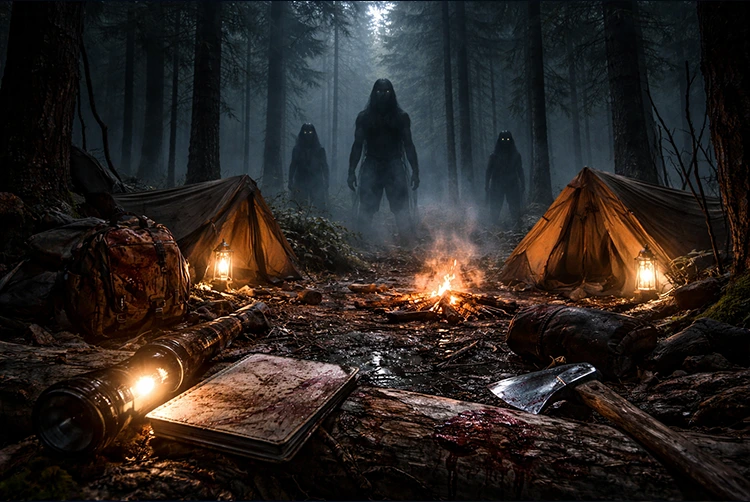
Every time you launch 99 Nights in the Forest on Roblox, the same message appears before you enter the game: “THIS GAME IS BASED ON A TRUE STORY. SOME DETAILS HAVE BEEN CHANGED.”
For most players, that line reads as a horror game convention the kind of disclaimer that exists to make you feel uneasy before anything has even happened. But unlike most claims of that kind, this one is actually true. 99 Nights in the Forest is genuinely rooted in one of the most extraordinary survival stories of the 21st century: a real plane crash in the Colombian Amazon in May 2023, and four Indigenous children who survived completely alone in the jungle for 40 days.
This guide explains the complete real-life event in full, breaks down exactly which parts of the Roblox game are drawn from that story, and clarifies which elements the supernatural Deer creature, the Cultists, the 99-night timeline are fictional additions created by developer Grandma’s Favourite to transform a miraculous news story into a survival horror experience.
If you enjoy horror survival games on Roblox with a story grounded in reality, you’ll also want to check out our guide to the best free Roblox survival games and top free horror games to play right now both have plenty of similar games worth playing after this one.
The True Story What Really Happened in the Amazon in 2023
The Plane Crash May 1, 2023
On the morning of May 1, 2023, a small Cessna C206 single-engine propeller plane took off from the remote Amazonian village of Araracuara in Colombia’s Caquetá department, carrying seven passengers a pilot, three adults, and four children. The family was traveling to the town of San José del Guaviare to visit the children’s father, Manuel Ranoque.
About 35 minutes into the flight, pilot Hernán Murcia radioed Colombia’s air traffic control with a mayday call: “My motor’s failing.” The plane disappeared over one of the densest, most remote stretches of the Amazon rainforest on Earth. Search teams were dispatched almost immediately, but the jungle swallowed any trace of where the aircraft had gone down.
When search crews eventually located the crash site on May 18, 2023, the wreckage told a devastating story. All three adults on the plane the pilot and the two other passengers including the children’s mother, Magdalena Mucutuy had been killed on impact. The children were nowhere to be found.
The Four Children
The four survivors who walked away from that wreck were:
- Lesly Jacobombaire Mucutuy, 13 years old
- Soleiny Jacobombaire Mucutuy, 9 years old
- Tien Ranoque Mucutuy, 4 years old (celebrated a birthday in the jungle)
- Cristin Ranoque Mucutuy, 11 months old (also had a birthday during the ordeal)
All four were members of the Huitoto Indigenous people, a group native to the Amazon region of Colombia with generations of inherited knowledge about surviving in the rainforest environment.
How They Survived 40 Days Alone in the Jungle
The children’s survival for 40 days in one of the most hostile environments on the planet is genuinely extraordinary, and understanding how they did it makes the story feel even more remarkable than the numbers suggest.
Lesly’s leadership was decisive. The 13-year-old later told her father that she had awakened after the crash and realized her mother had died. She pulled her younger siblings from the wreckage, including infant Cristin. From that moment, she became the group’s primary protector and decision-maker a 13-year-old responsible for keeping a baby and two young children alive in the Amazon.
Their Indigenous knowledge was critical. General Pedro Sánchez, who led the search and rescue operation, cited the children’s Indigenous background as one of three key factors in their survival: their will to live, their immunity to many jungle hazards, and crucially they knew the jungle. As a rescue team member put it: “A kid from the city might get scared in the jungle. But they didn’t get scared.”
They foraged for food systematically. When the cassava flour and fruit they had salvaged from the plane ran out, they ate seeds and jungle fruits they recognized as safe. Their knowledge of which plants were edible knowledge passed down through generations of Huitoto culture was the difference between starvation and survival for nearly six weeks.
They built shelter and hid from predators. The children hid in tree trunks to protect themselves from snakes, jaguars, and other animals. They collected water in a soda bottle they had taken from the wreckage. They slept together for warmth and protection.
What they carried from the plane: When rescued, the children were found with two small bags containing some clothes, a towel, a flashlight, two cellphones, a music box, and a soda bottle used for water. These minimal supplies, combined with Lesly’s jungle knowledge, sustained four children for 40 days.
The Search Operation Hope
The Colombian government launched a massive search and rescue operation code-named “Operation Hope” that combined modern military technology with Indigenous expertise. More than 110 special forces were deployed on the ground, searching over 1,600 miles of dense forest. The military used reconnaissance flights, infrared sensors, and satellite imagery.
One of the most significant breakthroughs came on May 30 nearly a month into the search when rescuers discovered small footprints, including one from a tiny foot, confirming the children were alive and moving. This discovery rekindled hope after weeks of uncertainty.
The Indigenous guides who joined the search were as critical as the military technology. The forest was “virgin jungle” a rescue volunteer described it as so dense that “you look in any direction and all you see are huge trees. It’s very easy to get lost.”
A rescue dog named Wilson played an important role in tracking the children’s movements through the jungle. Wilson himself went missing briefly during the search, becoming a secondary concern for rescue teams.
On June 9, 2023 — the children’s 40th day in the jungle soldiers and Indigenous guides found all four siblings approximately 2.5 miles from the crash site. They were alive but thin, dehydrated, and covered in insect bites. Rescuers rappelled from a hovering helicopter since the jungle canopy was too dense for landing, and hoisted the children up to the aircraft.
Lesly’s first words after rescue, according to one rescuer: “I’m hungry.”
Aftermath
The children were airlifted to a military hospital in Bogotá, Colombia’s capital, where they received treatment for dehydration and malnutrition. Colombian President Gustavo Petro celebrated their rescue nationally. The story made headlines around the world.
Lesly later drew a picture of Wilson the rescue dog with crayons a detail that has direct significance for the Roblox game, as we’ll explain below.
The story was subsequently documented in a Netflix documentary titled The Lost Children, which provided additional details about the children’s survival and the search operation. The documentary is dedicated to the three adults who died in the crash.
How 99 Nights in the Forest Was Inspired by This Story
Developer Grandma’s Favourite created 99 Nights in the Forest on Roblox and built the game’s premise directly from the Colombian Amazon story. Every time you launch the game, the disclaimer confirms this connection. Here is exactly what was taken from the real story and what was added:
What’s Real in the Game
Four children to rescue. The game’s central objective rescuing four lost children from a forest is a direct parallel to the four children who survived the Amazon crash. In the real story, the children survived alone; in the game, players act as rescuers trying to find them.
The crashed plane. You can find wrecked aircraft in 99 Nights in the Forest scattered around the map. These crash sites are directly inspired by the real plane crash. In the game, these locations typically contain valuable resources chests, fuel, bandages, and metal scraps making them high-priority exploration targets.
Crayon drawings. When you find the missing children in the game, they are surrounded by crayon drawings. This directly mirrors the real story: after being rescued, Lesly drew a picture of rescue dog Wilson using crayons, and other children in the group also drew pictures as a way to process their experience. The game preserves this real-world detail as both a narrative clue and an atmospheric element.
Survival under extreme conditions. The basic loop of 99 Nights in the Forest gathering food, building shelter, managing resources, avoiding predators, and keeping vulnerable individuals alive mirrors the actual experience the Huitoto children went through for 40 days in the Amazon.
The jungle environment. While the game’s forest has a horror-supernatural dimension, the oppressive density of the environment, the omnipresent danger, and the sense of being completely isolated from civilization are drawn from the reality of surviving in the Amazon.
What’s Fictional in the Game
The 99-night timeline. The real children survived for 40 days. The game extends this to 99 nights for gameplay purposes creating a longer, escalating survival challenge. The number 99 is a design choice, not a historical detail.
The Deer creature. The game’s primary antagonist a humanoid entity with a deer’s head that stalks players at night has no basis in the real story. It’s inspired by the Wendigo, a creature from Algonquian and other Indigenous North American folklore, typically described as a malevolent spirit associated with isolation, cannibalism, and cold wilderness. The Wendigo is depicted as a bipedal creature, often described as having features resembling a deer or elk, which is reflected in the game’s monster design. In the game’s lore, the Deer appears to have been created through some form of experimental science gone wrong not a real-world element.
The Cultists. Human enemies wearing deer antler headdresses and guarding areas of the forest have no connection to the real story. They are a fictional addition to expand the game’s threat variety and lore depth.
The Owl creature. The giant supernatural owl that attacks players in later nights is based loosely on the Kikiyaon, a mythical creature from West African folklore described as a large, predatory owl with supernatural properties. Like the Deer, it has no connection to the real Amazon survival story.
The supernatural atmosphere and horror elements. The real story, while extraordinary, contained no supernatural components. The game’s eerie sounds, unexplained phenomena, and horror-game atmosphere are entirely fictional additions created to make 99 Nights in the Forest function as a survival horror experience rather than a straightforward survival simulator.
The Wendigo The Folklore That Became The Deer
Understanding where The Deer creature comes from adds a layer to the game that most players miss. The Wendigo is one of the most enduring creatures in North American Indigenous folklore, particularly among Algonquian-speaking peoples including the Ojibwe, Cree, and Innu nations.
In traditional accounts, the Wendigo is a being associated with:
- The deep, cold wilderness and isolation
- Extreme hunger and cannibalistic impulses
- Supernatural strength and an ability to move silently
- A fear of fire and light
- Walking upright on two legs, despite appearing animalistic
The game’s Deer embodies almost every one of these traits: it hunts silently, is repelled by campfire light, stalks players who are isolated from their group, and enters a “Hungry form” that makes it more aggressive a direct reference to the Wendigo’s association with ravenous hunger.
The Wendigo connection is also why the game’s survival mechanic of keeping the campfire burning at all times is so central. Fire isn’t just a warmth mechanic it’s a mythological repellent against the kind of entity The Deer represents.
What the Game Gets Right About Real Jungle Survival
Beyond the supernatural horror, 99 Nights in the Forest captures some genuine truths about survival in hostile forest environments:
Fire is life. In the real Amazon, maintaining heat, keeping insects away, and having a signal source are all fire-dependent. The game’s campfire mechanic reflects this directly letting the fire go out is one of the fastest ways to lose the game.
Children need constant protection. In the real story, Lesly’s inability to leave her younger siblings unattended was a defining constraint on every decision she made. The game mirrors this the rescued children cannot fight or defend themselves and will be attacked if left alone.
Resources run out. The real children’s initial food supply from the plane lasted only a few days. The game’s resource scarcity creates exactly this pressure early game survival is as much about efficient gathering as it is about combat.
The jungle changes at night. The Amazon’s predator activity genuinely shifts after dark. Jaguars, caimans, and venomous snakes are more active at night, and visibility drops to almost nothing. The game’s day/night cycle safe exploration during the day, life-threatening dangers after dark reflects this reality.
The Netflix Documentary The Lost Children
If the true story behind 99 Nights in the Forest interests you beyond the game, Netflix produced a full documentary called The Lost Children that covers the crash, the 40-day search, and the children’s eventual rescue in detail.
The documentary includes:
- Testimonies from family members and rescuers
- Footage from the search operation
- Details about how the children survived, told partly through Lesly’s own voice
- Context about the children’s lives before the crash and the circumstances of the journey
- The story of rescue dog Wilson
The documentary is dedicated to Magdalena Mucutuy and the other adults who died in the crash. It is currently available on Netflix.
99 Nights in the Forest Real vs. Fictional Summary
| Element | Real or Fictional? |
|---|---|
| Four children lost in a forest | Real — directly based on the Mucutuy siblings |
| Plane crash at the start | Real — the game features downed aircraft as key locations |
| Children cannot defend themselves | Real — reflects the children’s helplessness in the jungle |
| Crayon drawings as clues | Real — Lesly drew pictures of Wilson after rescue |
| Surviving by foraging food | Real — the children ate jungle fruits and cassava flour |
| 99-night timeline | Fictional — real survival was 40 days |
| The Deer / Wendigo creature | Fictional — based on Algonquian folklore, not the real story |
| Cultists as enemies | Fictional — no real-world basis |
| The Owl creature | Fictional — based on Kikiyaon mythology |
| Supernatural horror atmosphere | Fictional — the real story had no supernatural elements |
| Campfire as protection | Inspired by reality — fire is genuinely critical in wilderness survival |
Why the True Story Makes the Game More Powerful
The decision to ground 99 Nights in the Forest in a real event was a design choice that pays off. Knowing that the four children you’re trying to rescue represent four real kids who survived something genuinely terrifying changes how you interact with the mission objective. They stop being abstract game tokens and start feeling like people worth protecting.
The real story also makes the game’s survival mechanics feel less arbitrary. When the game tells you to keep the fire burning and gather food before nightfall, it’s not just issuing mechanical instructions it’s echoing what Lesly did every single day for 40 days to keep Soleiny, Tien, and baby Cristin alive.
That’s what the disclaimer means. The Deer isn’t real. The Cultists aren’t real. The 99 nights aren’t real. But the four children are. The plane is real. The forest is real. The survival is real. And that’s what makes it hit harder than most horror games on Roblox.
Frequently Asked Questions
Is 99 Nights in the Forest based on a true story?
Yes. The game is based on the real 2023 Colombian Amazon plane crash in which four Indigenous children Lesly, Soleiny, Tien, and Cristin survived for 40 days alone in the jungle after their Cessna aircraft went down. The supernatural elements (The Deer, Cultists, The Owl) are fictional additions to the game.
What is the real story behind 99 Nights in the Forest?
On May 1, 2023, a small plane crashed in the Colombian Amazon, killing all three adults on board including the children’s mother. Four children, aged 13, 9, 4, and 11 months, survived and spent 40 days alone in the jungle before being rescued by Colombian special forces and Indigenous guides in Operation Hope.
Who are the four children in 99 Nights in the Forest based on?
The four children in the game are inspired by Lesly (13), Soleiny (9), Tien (4), and Cristin (11 months) Mucutuy/Ranoque four Huitoto Indigenous siblings from Colombia who survived the real Amazon plane crash in 2023.
Is The Deer in 99 Nights in the Forest based on a real creature?
No. The Deer is inspired by the Wendigo, a creature from Algonquian and other North American Indigenous folklore associated with isolation, hunger, and the wilderness. It is a fictional addition to the game not connected to the real Colombia story.
How long did the real children survive in the jungle?
40 days from May 1 to June 9, 2023. The game extends this to 99 nights for gameplay purposes.
Is there a documentary about the real story?
Yes. Netflix produced The Lost Children, a full documentary covering the crash, the 40-day search, and the children’s rescue. It includes testimonies from family members and rescuers and is dedicated to the adults who died in the crash.
How did the real children survive the Amazon?
The oldest child, 13-year-old Lesly, used Huitoto Indigenous knowledge to forage for food (jungle fruits, seeds, and cassava flour from the plane), build shelter in tree trunks, collect water, and protect her three younger siblings from predators including snakes and jaguars.
Where can I play 99 Nights in the Forest?
The game is available on Roblox. Search for it in the Roblox games directory or access it directly through the Roblox platform on PC, mobile, or console.
The four Mucutuy children are still alive. They recovered from the ordeal and their story became a symbol of human resilience that captured global attention. That their survival inspired a game played by millions of people around the world gives the real story an unexpected second life and means that every player who boots up 99 Nights in the Forest and reads that disclaimer is, in some small way, being reminded of what four real kids actually survived.