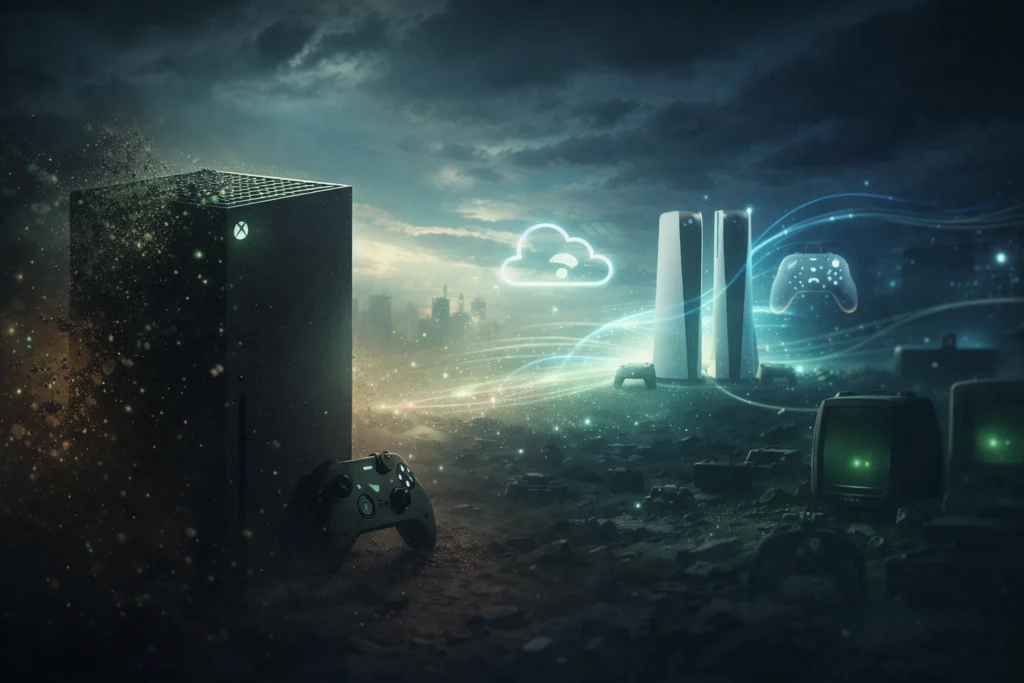
The phrase “Xbox Series X end of era” has been trending across gaming forums, search results, and social media, causing confusion and concern among players. Many gamers are asking whether Microsoft is abandoning the console, shifting focus to new hardware, or changing its long-term gaming strategy. The reality is more nuanced—and far less alarming—than the headline suggests.
This article breaks down what the so-called “end of era” actually means, why the conversation started, and how it affects gamers today and in the coming years.
Why People Are Saying the Xbox Series X Era Is Ending
Table of Contents
ToggleThe “end of era” narrative stems from a broader shift in Microsoft’s gaming strategy rather than the discontinuation of the Xbox Series X itself. Microsoft has increasingly emphasized ecosystem-based gaming spanning console, PC, cloud, and subscription services over traditional console generations.
This strategic evolution makes some players feel like the classic console-first era is fading, even though the hardware remains fully supported.
Read: Safety Guide for G+ Games
Xbox Series X Is Not Being Discontinued
Despite rumors, the Xbox Series X is not being phased out. Microsoft continues to manufacture, sell, and support the console. New games, system updates, and performance optimizations are still being delivered regularly, and major first-party titles are designed to run optimally on Series X hardware. The console remains Microsoft’s most powerful gaming system and is far from obsolete.
What “End of Era” Really Refers To
In practical terms, the phrase refers to the end of a traditional console-exclusive mindset. Instead of locking games to one platform, Microsoft is prioritizing cross-platform availability, cloud streaming, and backward compatibility.
This means Xbox Series X is becoming part of a broader gaming ecosystem rather than the sole centerpiece. For gamers, this represents expansion—not loss.
Read: Escape Road City 2
How This Shift Benefits Gamers
From a user perspective, this transition offers several advantages. Players gain more flexibility in how and where they play games, whether on console, PC, mobile devices, or smart TVs through cloud gaming.
Game Pass continues to deliver value by offering a large rotating library, reducing the need to buy every title individually. For many gamers, this lowers costs while increasing access.
What Happens to Physical Games and Ownership
One concern tied to the “end of era” discussion is physical media. While digital gaming is growing, Microsoft has not eliminated disc support. The Xbox Series X still includes a disc drive, and physical games remain playable.
However, the industry trend is clearly moving toward digital-first releases. This doesn’t invalidate physical collections but does signal a gradual shift in consumer habits.
Read: Eddy gordo Tekken’s Character
Performance and Longevity of Xbox Series X
The Xbox Series X is built with long-term performance in mind. With its powerful CPU, GPU, and fast SSD, it remains capable of running modern AAA games at high resolutions and frame rates.
Microsoft has committed to supporting current-generation consoles for years, meaning gamers can expect continued optimization and compatibility well into the future.
How This Compares to Previous Console Transitions
Unlike past generational shifts where old consoles were quickly left behind, Microsoft’s approach is more gradual. Backward compatibility ensures older titles remain playable, and cross-generation releases reduce pressure to upgrade immediately. This makes the current transition feel less like an abrupt ending and more like an evolution.
Read: Top 20 best free VR games to play in 2026
Should Gamers Be Worried About Buying an Xbox Series X Now?
For most players, there is no reason to avoid buying an Xbox Series X. It still offers top-tier performance, access to a massive game library, and long-term support. The idea of an “end of era” reflects changing industry philosophy, not a decline in the console’s relevance or value.
What This Means for the Future of Xbox Gaming
Looking ahead, Xbox gaming will likely become even more platform-agnostic. Consoles like the Series X will coexist with cloud services, PCs, and handheld devices rather than being replaced outright. For gamers, this means more choice, fewer barriers, and greater continuity across devices.
Read: Bumper Pool
Final Takeaway
The “Xbox Series X end of era” conversation reflects a shift in how games are delivered and experienced—not the end of the console itself. For gamers, this evolution means more flexibility, broader access, and sustained support. Rather than signaling decline, it marks a new chapter in how Xbox defines gaming.
FAQs
Is Microsoft ending support for Xbox Series X?
No. Microsoft continues to support the Xbox Series X with updates, new games, and system improvements.
Does “end of era” mean a new Xbox is coming soon?
Not necessarily. While future hardware is always possible, there is no indication that the Series X is being replaced in the near term.
Will Xbox Series X games stop releasing?
No. Major upcoming titles are still being developed and optimized for Xbox Series X.
Is Xbox moving away from consoles entirely?
No. Microsoft is expanding its ecosystem, not abandoning console gaming.
Is Xbox Series X still worth buying in 2025 and beyond?
Yes. It remains a powerful, well-supported console with strong long-term value.