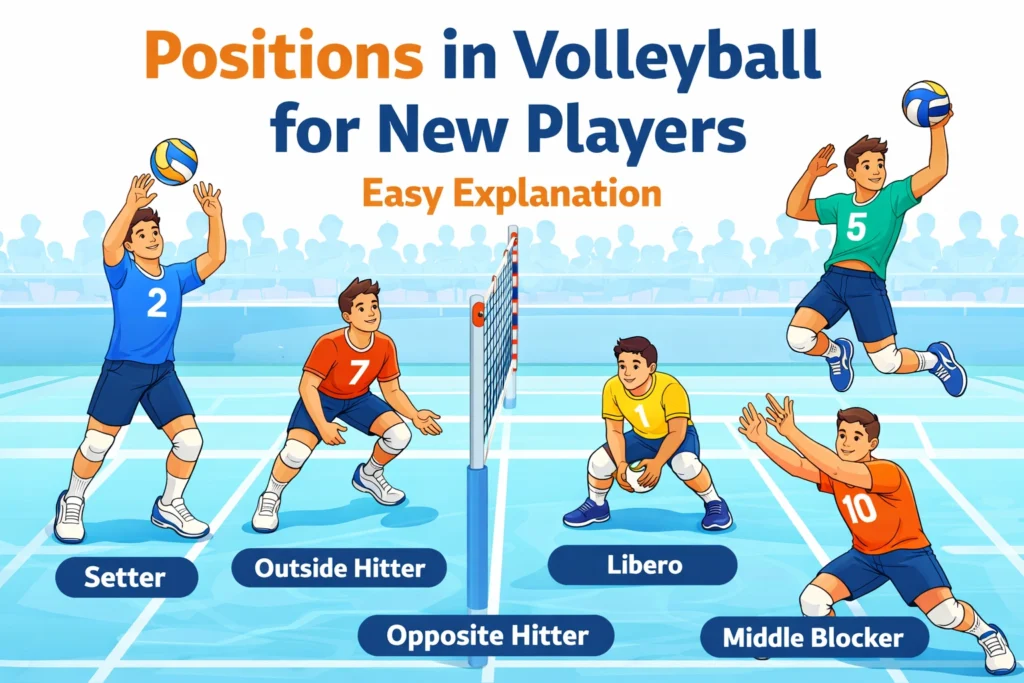
Volleyball can seem confusing at first, especially when you hear terms like setter, libero, or middle blocker. Understanding positions in volleyball is one of the most important steps for new players because each role has a specific responsibility on the court. Once you know who does what, the game becomes much easier to follow and play.
How Many Positions in Volleyball?
In standard indoor volleyball, each team has six players on the court, and each player fills a specific position. While players rotate during the game, their main roles stay the same.
The six main positions in volleyball are:
Setter
Outside Hitter
Opposite Hitter
Middle Blocker
Libero
Defensive Specialist
Setter
The setter is often called the playmaker of the team. Their main job is to set the ball for attackers so they can spike it over the net.
Setters need good hand control, quick decision-making, and communication skills. For beginners, this position is great for players who like leadership and teamwork.
Outside Hitter
The outside hitter is one of the main attackers. They usually hit from the left side of the court and are involved in both offense and defense.
This position is ideal for beginners because outside hitters get many chances to hit, pass, and learn different skills.
Opposite Hitter
The opposite hitter plays across from the setter and is another strong attacking option. They often block the opposing team’s outside hitter and hit from the right side.
Opposite hitters are usually strong, consistent players who can attack and block effectively.
Middle Blocker
The middle blocker focuses on stopping the other team’s attacks at the net. They also perform quick attacks close to the setter.
This position requires good timing, jumping ability, and quick reactions. Beginners can still play this role but may need practice with footwork and blocking technique.
Libero
The libero is a defensive specialist who wears a different colored jersey. They are not allowed to attack the ball above the net or serve in most leagues.
Liberos focus on passing and digging spikes, making them perfect for players who enjoy defense rather than attacking.
Defensive Specialist
A defensive specialist plays in the back row and helps with passing and defense. Unlike the libero, they can serve and do not wear a different jersey.
This role is great for new players who are still developing their hitting skills but are good at receiving serves.
Rotation and Position Changes
One important thing for new players to understand is rotation. When a team wins the serve, players rotate clockwise. This means players will move into different spots on the court but continue performing their main role when possible.
Rotation helps keep the game fair and ensures everyone learns multiple skills.
Which Position in Volleyball Is Best for Beginners?
For most new players, outside hitter, defensive specialist, or libero are the easiest positions to start with. These roles help beginners learn basic skills like passing, serving, and teamwork.
Coaches often assign positions based on height, strength, and comfort level as players improve.
Why Learning Positions in volleyball Matters
Knowing positions in volleyball helps players:
Understand their responsibilities
Improve teamwork and communication
Make better decisions during rallies
Enjoy the game more
Once positions make sense, volleyball becomes faster, more exciting, and less confusing.
FAQs
How many positions are there in volleyball?
There are six main positions in volleyball: setter, outside hitter, opposite hitter, middle blocker, libero, and defensive specialist.
What is the easiest volleyball position for beginners?
Outside hitter and defensive specialist are often the easiest positions for beginners because they involve basic skills like passing and hitting.
What does a libero do in volleyball?
A libero focuses on defense, passing, and digging. They cannot attack the ball above the net and usually wear a different colored jersey.
Can players change positions during a game?
Players rotate positions on the court during the game, but their main role usually stays the same throughout the match.
Is height important for volleyball positions?
Height is helpful for hitters and middle blockers, but positions like libero and setter rely more on skill, speed, and accuracy than height.