
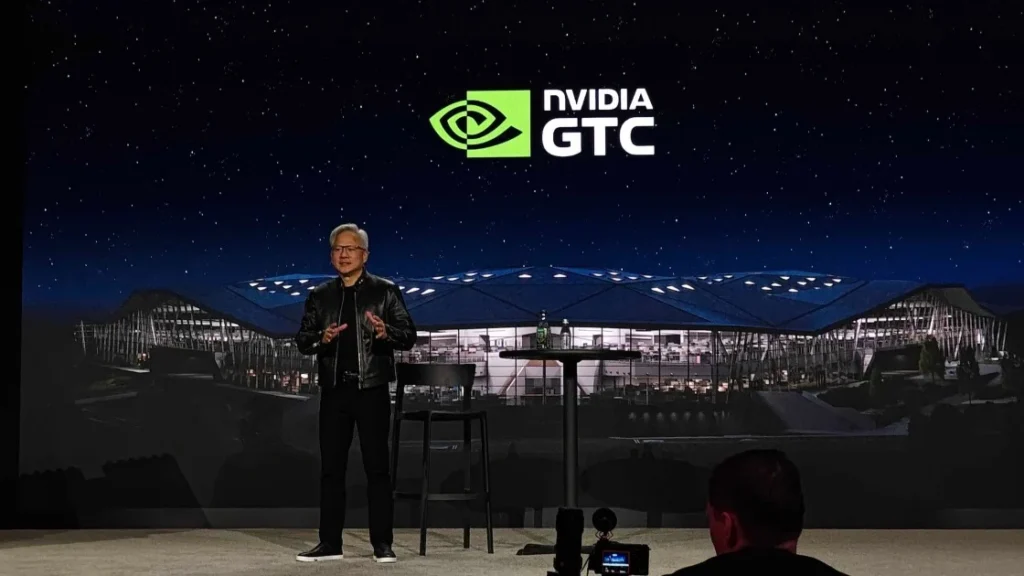
NVIDIA just dropped one of the biggest graphics leaps in years at GTC 2026: NVIDIA DLSS 5. Unlike earlier versions that focused mainly on boosting frame rates through upscaling and frame generation, DLSS 5 shifts gears entirely. It introduces real-time neural rendering that adds photorealistic lighting, materials, and details straight into your games—making them look closer to Hollywood VFX than traditional real-time rendering ever could.
If you’ve been chasing that “next-gen” feeling in 2026, this is it. Announced just days ago, DLSS 5 arrives this fall and promises to redefine how games look on RTX 50-series GPUs. Let’s break down everything you need to know about NVIDIA DLSS 5, from how it actually works to the games already lining up for it.
What Is NVIDIA DLSS 5 and How Does It Differ from Previous Versions?
DLSS started in 2018 as a clever AI upscaler. DLSS 2 improved image quality, DLSS 3 added frame generation for massive FPS jumps, and DLSS 4/4.5 brought multi-frame generation and better ray reconstruction.
DLSS 5 flips the script. It’s no longer just about performance—it’s about visual fidelity at a cinematic level. NVIDIA calls it a “GPT moment for graphics.” Instead of simply reconstructing pixels, the new real-time neural rendering model analyzes a single frame’s color data and motion vectors, then infuses the entire scene with photorealistic lighting and materials that stay consistent frame-to-frame.
Think subsurface scattering on skin that actually reacts to light like real flesh, hair that catches rim lighting naturally, fabric with accurate sheen, and environmental effects (back-lit, overcast, or dramatic shadows) that feel anchored to the 3D world rather than faked. All of this runs smoothly at up to 4K in real time.
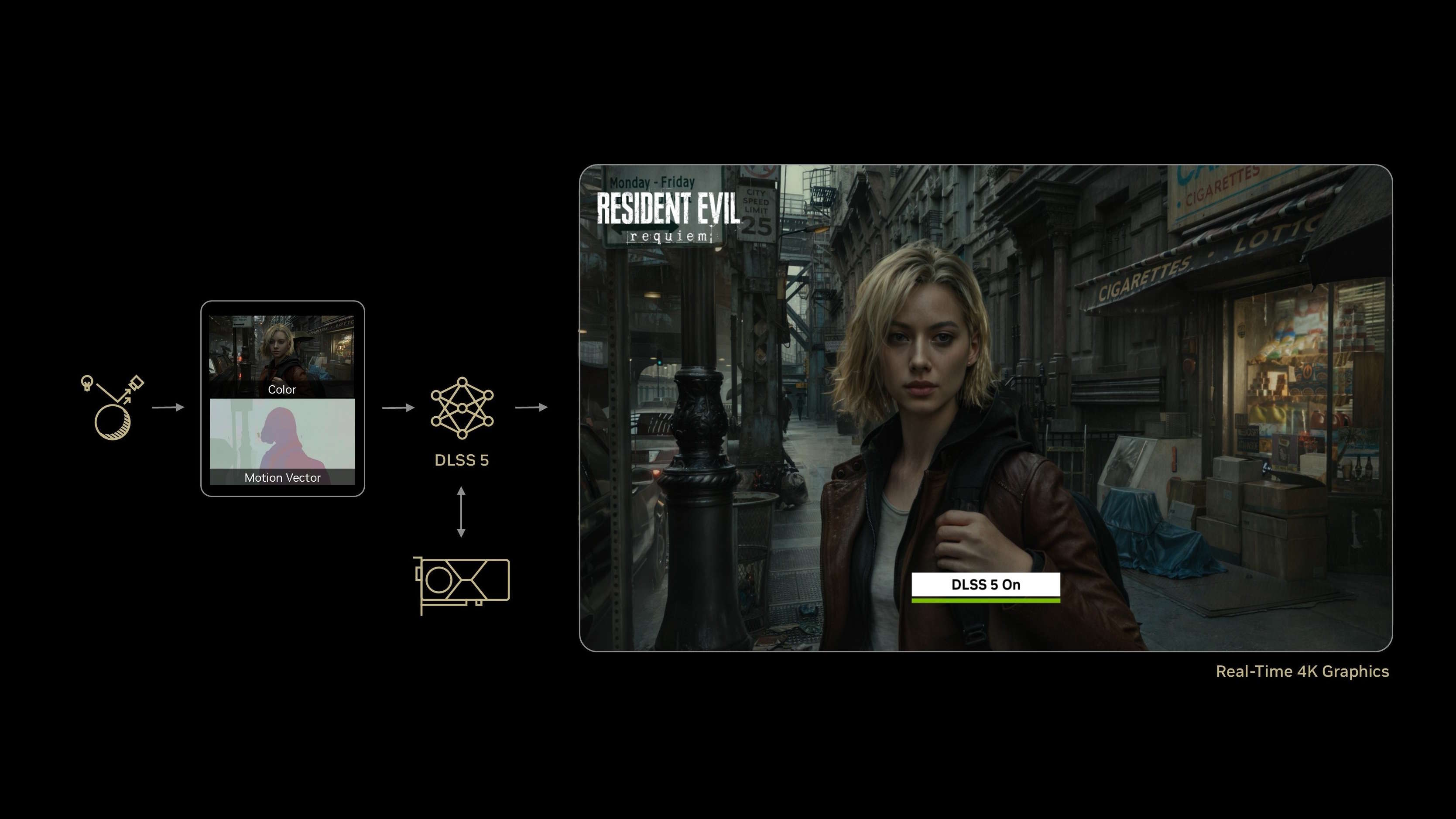
This diagram shows the magic: DLSS 5 takes basic color + motion vectors from the game engine and outputs photoreal results without traditional rendering tricks.
It still plays nice with older DLSS features too—super resolution, frame generation, and ray reconstruction will all be available alongside the new neural rendering for the ultimate combo of beauty and speed.
The Visual Breakthrough: Before-and-After Magic
The demos NVIDIA showed at GTC 2026 were jaw-dropping. In Resident Evil Requiem, character skin and wet street reflections suddenly looked hyper-real. Subtle details like translucent skin, contact shadows, and rim lighting appeared that simply weren’t there before.
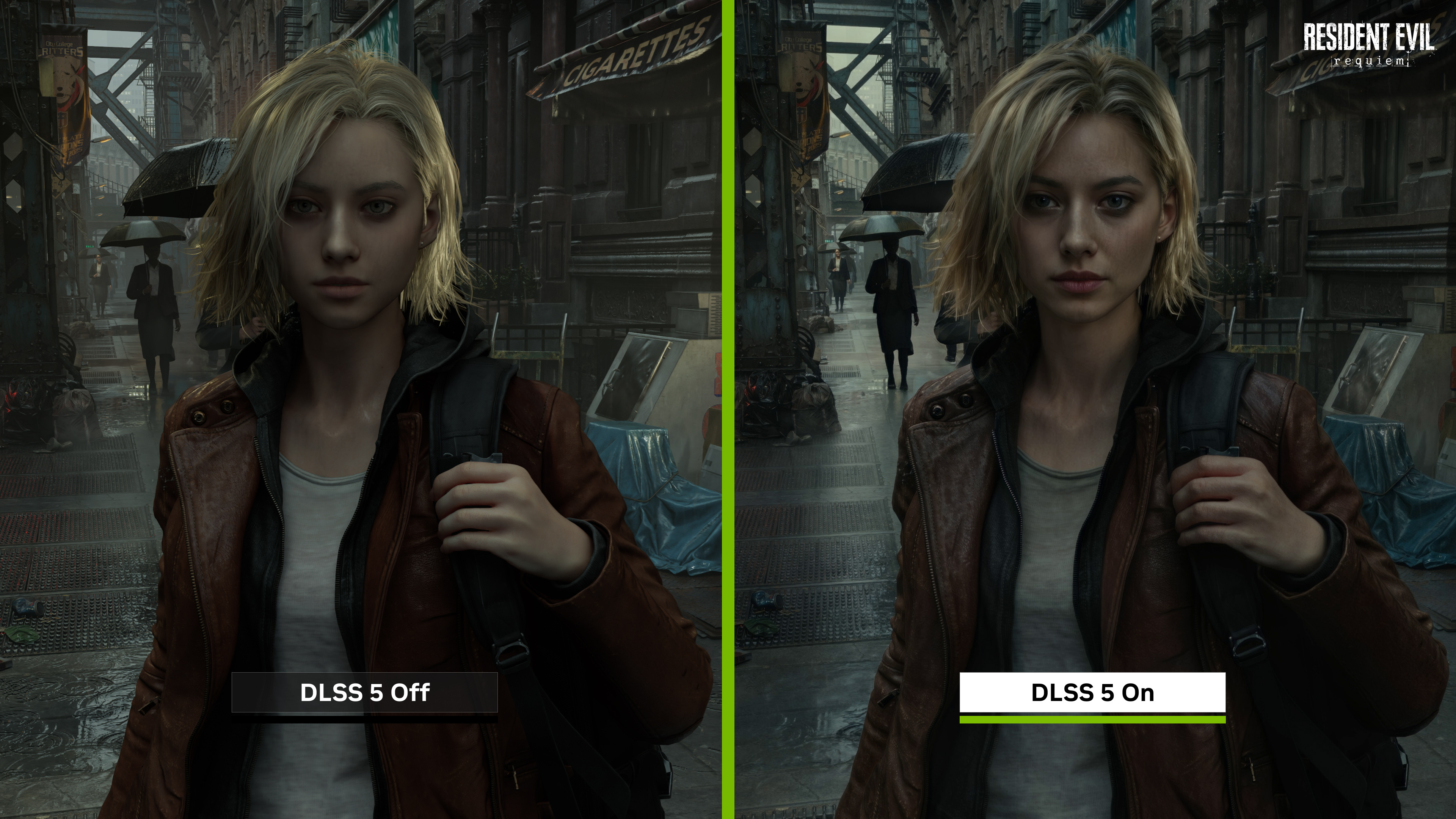
DLSS 5 Off vs On in Resident Evil Requiem—notice the realistic skin tones, hair strands, and natural lighting that pops instantly.
Similar upgrades appeared in Hogwarts Legacy updates and other titles. The AI understands complex scene semantics (characters, hair, fabric, lighting conditions) from just one frame, so everything stays consistent even during fast motion.

Early looks in Hogwarts Legacy show characters and environments gaining that extra layer of life-like depth.
These aren’t just “sharper” images they feel like the game world finally matches what developers dreamed of but couldn’t render in real time until now.
Which GPUs Will Support NVIDIA DLSS 5?
DLSS 5 is built for the RTX 50-series (Blackwell architecture) and newer cards. NVIDIA optimized the launch version to run on a single GPU—no multi-GPU requirement—which is huge for most gamers.
RTX 50-series cards like the RTX 5080 pictured above will deliver the full neural rendering experience at launch this fall. Older RTX 40-series cards may get partial support later, but for the complete photoreal upgrade you’ll want Blackwell silicon.
If you’re building a new rig, pair it with strong CPU and fast RAM to let the AI work its magic without bottlenecks.
Games Already Lining Up for DLSS 5 Support
NVIDIA confirmed DLSS 5 integration in several big titles launching or updating around the fall window:
- Assassin’s Creed Shadows
- Starfield (major update)
- Resident Evil Requiem
- Hogwarts Legacy enhancements
- AION 2
- Black State
- CINDER CITY
- NARAKA: BLADEPOINT
- Oblivion Remastered
More titles will join via NVIDIA Streamline, making adoption easier for developers than ever.
If you love immersive worlds that feel alive, you’ll want to check our recent roundup of the best immersive sim games 2026 many of these will get a massive visual glow-up from DLSS 5.
DLSS 5 vs DLSS 4, AMD FSR, and the Competition
DLSS 5 isn’t competing on raw FPS like DLSS 4.5’s dynamic multi-frame generation. It’s about quality first. Expect it to combine beautifully with existing DLSS tools for both beauty and performance.
Compared to AMD’s FSR or Intel’s XeSS, NVIDIA’s neural approach still leads in image stability and realism especially now with semantic understanding of materials and lighting. For a deeper look at AMD’s side of the graphics arms race, read our breakdown of RDNA 2’s groundbreaking architecture.
On the budget side, the Intel Arc B570 makes an interesting companion or alternative if you’re mixing ecosystems, but DLSS 5 remains an RTX-exclusive powerhouse.
How Will DLSS 5 Change Your Gaming Experience?
Once it lands this fall, expect:
- Cinematic lighting that reacts realistically to every surface
- Consistent details across fast-paced scenes (no shimmering or artifacts)
- Photoreal materials without sacrificing frame rates
- Easier developer workflows—artists keep full creative control
It honors the original artistic vision while pushing realism further than ever. No more “AI slop” complaints in early previews NVIDIA tuned it to respect source 3D content.
How to Enable DLSS 5 When It Launches
When the update drops:
- Update your GeForce drivers and NVIDIA App.
- In supported games, toggle DLSS 5 in graphics settings (Quality, Balanced, Performance modes will likely include the neural rendering layer).
- Combine with existing DLSS features for maximum effect.
It’s as simple as flipping a switch, just like every previous DLSS version.
The Future of Gaming Graphics
DLSS 5 marks the moment AI stops being a performance helper and becomes a true creative partner in real-time graphics. Fall 2026 is going to feel like a generational leap—games will finally look as good as the trailers promised.
Whether you’re exploring Hogwarts, surviving horror streets in Resident Evil, or battling in open worlds, DLSS 5 will make every scene pop with life-like detail.
DLSS 5 vs Unreal Engine 5 Rendering
Unreal Engine 5 and DLSS 5 are not competitors — they are designed to work together. UE5 is a complete rendering pipeline; DLSS 5 is an intelligent enhancement layer that plugs into it.
Unreal Engine 5 Core Tech:
- Nanite — virtualized geometry that streams billions of triangles without traditional LODs.
- Lumen — dynamic global illumination (software fallback or hardware ray-traced).
- TSR — Unreal’s own temporal upscaler (comparable to DLSS Super Resolution but engine-native).
- Full artist-controlled materials, shaders, and lighting.
How DLSS 5 Changes UE5 Games:
- UE5 gives you massive detail and dynamic lighting, but real-time budgets still limit certain effects (complex skin, hair, micro-material responses).
- DLSS 5 adds the missing photoreal layer without forcing developers to increase polygon counts or ray samples.
- Result: UE5 worlds suddenly look like next-gen cinematic VFX while keeping 60–120+ FPS.

Hogwarts Legacy example — DLSS 5 On (right) instantly adds lifelike skin, hair, and lighting that even UE5’s Lumen + Nanite base can’t achieve alone in real time.
Key Differences Side-by-Side:
| Aspect | Unreal Engine 5 (Nanite + Lumen + TSR) | DLSS 5 Neural Rendering | Winner When Combined |
|---|---|---|---|
| Geometry Detail | Massive (virtualized) | No change — uses engine’s geometry | UE5 |
| Global Illumination | Dynamic (software or RT) | Enhances existing lighting with AI inference | DLSS 5 + Lumen |
| Material Realism | Artist shaders (limited by frame time) | AI-generated subsurface, sheen, interactions | DLSS 5 |
| Upscaling & Stability | TSR (very good) | Full DLSS suite (superior in motion) | DLSS 5 |
| Artist Control | Total (materials, blueprints) | Masking + intensity + grading on top of UE5 | Both (synergy) |
| Hardware Requirement | Works on any GPU | RTX 50-series only for full neural rendering | RTX + UE5 |
UE5 artists who saw early DLSS 5 previews said it makes even mid-tier engines look “UE5-competitive” and pushes actual UE5 titles into a new visual tier. It doesn’t replace Nanite or Lumen it completes them.
In short: UE5 builds the incredible 3D world; DLSS 5 makes that world look alive with photoreal lighting and materials that were previously impossible in real time.
DLSS 5 launches Fall 2026 alongside the first wave of supported titles (including several built in Unreal Engine 5). When it arrives, expect UE5 games to get the biggest visual jump since Lumen and Nanite debuted. The future of real-time graphics is no longer just faster — it’s smarter.
FAQs About NVIDIA DLSS 5
When does NVIDIA DLSS 5 release?
This fall 2026. Early previews are already available at GTC events, with full rollout expected alongside major game updates.
Which GPUs are required for DLSS 5? Primarily RTX 50-series cards (and newer).
It’s optimized for single-GPU use at launch.
Will DLSS 5 improve frame rates or just visuals?
It focuses on photorealistic visual fidelity but works alongside DLSS super resolution and frame generation for big performance gains too.
Which games support DLSS 5 at launch?
Confirmed titles include Assassin’s Creed Shadows, Starfield updates, Resident Evil Requiem, Hogwarts Legacy enhancements, AION 2, and more.
Is DLSS 5 better than AMD FSR 4?
Early impressions show superior material understanding and lighting consistency, though final blind tests will tell the full story once games ship.
NVIDIA DLSS 5 isn’t just another tech update it’s the start of a new era where AI makes games look truly alive. Mark your calendars for fall 2026. The wait will be worth it.