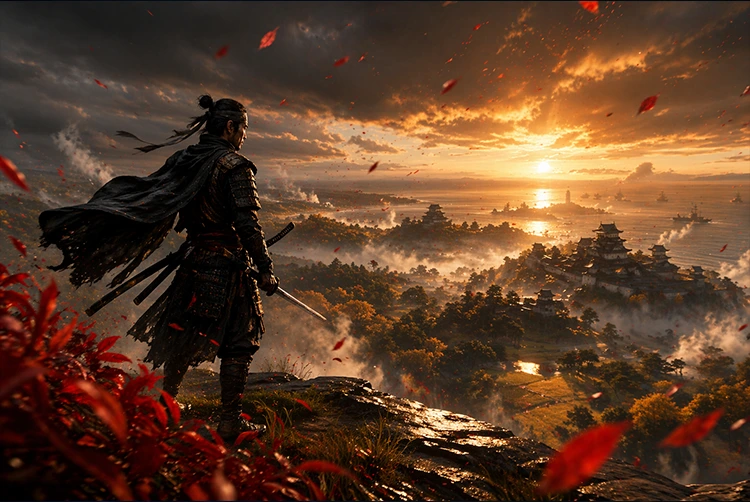
Ghost of Tsushima, released in 2020 by Sucker Punch Productions, quickly became one of the most beloved PlayStation exclusives. Set in 13th-century Japan during the Mongol invasion of Tsushima Island, it follows samurai Jin Sakai as he fights to protect his home. In 2026, with the Director’s Cut available on PC, PS5, and the sequel Ghost of Yōtei already out, many players are revisiting or discovering this open-world action-adventure for the first time. Our Ghost of Tsushima review dives deep into its strengths, weaknesses, and why it remains a standout title even years later.
From its breathtaking visuals and fluid combat to its thoughtful exploration of honor versus survival, the game delivers a cinematic samurai experience. Whether you’re on console or PC, this review covers the full package—including the Iki Island expansion and the co-op Legends mode.
The Story: Honor, Sacrifice, and the Birth of the Ghost
Jin Sakai starts as a noble samurai bound by strict codes of bushido. When the Mongol army led by Khotun Khan overruns Tsushima, traditional warfare fails. Jin must choose between honor and pragmatic tactics—becoming the “Ghost,” a shadowy figure who uses stealth, poison, and fear against the invaders.
The narrative draws heavy inspiration from classic samurai films like those by Akira Kurosawa (the game even includes a “Kurosawa Mode” with black-and-white visuals and film grain). Supporting characters like Yuna, Lord Shimura, and Sensei Ishikawa add emotional depth, exploring themes of loyalty, revenge, and cultural identity.
While some critics noted the story follows familiar beats, the emotional payoff and moral dilemmas feel genuine. In 2026, with more mature storytelling in games, Tsushima’s tale still holds up as a solid, character-driven epic. The Iki Island DLC deepens Jin’s backstory and introduces new personal conflicts.
Gameplay: Stunning Combat and Satisfying Exploration
Combat is the heart of Ghost of Tsushima. The stance system lets you switch fighting styles to counter different enemy types—Stone for shields, Water for agile foes, Wind for groups, and Moon for brute force. Parries, dodges, and perfectly timed strikes create intense, cinematic duels that feel rewarding rather than button-mashy.
Stealth adds variety. You can assassinate from tall grass, use distractions, or employ tools like kunai and smoke bombs. The game smartly guides exploration with the “Guiding Wind” mechanic—simply swipe the touchpad (or equivalent on PC) and the wind shows the way to your objective without cluttering the screen with markers.
Side activities include liberating Mongol outposts, collecting haiku, finding fox dens for charm upgrades, and bathing in hot springs. These feel organic rather than checklist-driven. The photo mode remains one of the best in gaming, letting players capture the island’s beauty.
On PC, the Director’s Cut benefits from unlocked frame rates, higher resolutions, and improved visuals with ray tracing options. Many 2024–2026 reviews praise the port’s performance, though some note occasional stuttering on certain setups.
Graphics and Sound: A Visual Masterpiece
Even in 2026, Tsushima’s world looks stunning. Lush forests, misty mountains, golden fields, and cherry blossoms create an incredibly immersive feudal Japan. Dynamic weather, day-night cycles, and detailed character models (especially in Director’s Cut) enhance the atmosphere.
The score by Ilan Eshkeri and Shigeru Umebayashi blends traditional Japanese instruments with orchestral swells, making every duel and horseback ride feel epic. Voice acting is strong, with authentic Japanese dialogue available alongside English.
PC enhancements like DLSS/FSR support and ultrawide monitor compatibility make it shine on high-end rigs. Players on Steam Deck or mid-range hardware also report solid performance after patches.
Legends Mode: Co-Op Samurai Action
Ghost of Tsushima’s free Legends mode adds a cooperative multiplayer layer. Up to four players tackle story-inspired missions, survival waves, and raids as customizable classes (Samurai, Ronin, Hunter, Assassin). It features its own progression, gear, and mythology-based enemies.
In 2026, Legends still has an active community. Crossplay between PC, PS4, and PS5 is supported (initially in beta at PC launch, now more stable), though it requires a PlayStation Network account for console integration. The mode offers a fun change of pace from the single-player campaign and extends replayability significantly.
If you enjoy co-op experiences, you might also like our guides on other multiplayer adventures. Check our article on Dead Island 2 crossplay for more zombie-slaying squad tips or explore browser-based options in Unblocked Games G+ when you need quick fun.
Pros and Cons of Ghost of Tsushima
Pros:
- Gorgeous open world with meaningful exploration
- Deep, stance-based combat that stays engaging
- Strong characters and emotional story
- Excellent photo mode and cinematic presentation
- Iki Island DLC adds substantial new content
- Solid PC port with modern features
Cons:
- Some side quests and activities feel repetitive
- Open-world formula shows its age compared to newer titles
- Occasional pacing issues in the main story
- Legends requires PSN on PC for full crossplay
Who Should Play Ghost of Tsushima Today?
If you love story-rich action-adventures with beautiful settings and satisfying melee combat, Ghost of Tsushima is still highly recommended in 2026. New players will appreciate the complete Director’s Cut package. Veterans returning for New Game+ or higher difficulties will find the world as inviting as ever.
It’s particularly great for fans of historical fiction, samurai lore, or games like Assassin’s Creed, Sekiro, or The Last of Us. With Ghost of Yōtei continuing the legacy, Tsushima serves as the perfect entry point. For performance tips on any platform, including optimization for open-world games, see our related posts on PlayXArena.
How Does It Compare to Newer Releases?
In a post-Ghost of Yōtei world, Tsushima feels like a refined classic. It avoids some modern open-world bloat while delivering memorable moments. Combat remains more accessible and cinematic than many souls-like titles, yet still demands skill.
The PC version stands out as the definitive way to experience it for many, offering superior visuals and controls for mouse and keyboard fans.
Tips for New Players
- Experiment with stances early don’t stick to one.
- Use the Guiding Wind and listen to the environment.
- Complete character tales for deeper story and upgrades.
- Try Kurosawa Mode for a classic film feel.
- On PC, tweak settings for your hardware; most patches have improved stability.
FAQs about Ghost of Tsushima
Is Ghost of Tsushima worth playing in 2026?
Yes. The Director’s Cut offers a complete, polished experience with strong visuals, combat, and story that hold up exceptionally well.
Does Ghost of Tsushima have crossplay?
Legends mode supports crossplay between PC, PS4, and PS5 (with a PSN account required for full integration). The single-player campaign is offline.
Do I need to play the original before Ghost of Yōtei?
Not required, but playing Tsushima first enriches the world and themes. Many consider it the better starting point.
What platforms is Ghost of Tsushima available on?
Originally PS4 and PS5 (Director’s Cut), and since May 2024 on PC via Steam and Epic Games Store.
Is the PC version good?
Yes praised for performance, visuals, and features. Some minor technical issues exist but patches have addressed most concerns.
Final Verdict: A Timeless Samurai Adventure
Ghost of Tsushima earns a strong 9/10 . It’s a visually stunning, emotionally engaging open-world game with combat that feels weighty and cinematic. While not flawless some repetition creeps in—the overall package, especially with Iki Island and Legends, creates one of the most memorable samurai experiences in gaming.
Whether you’re a longtime fan replaying on PC or a newcomer drawn by the hype around the sequel, Tsushima delivers. The wind will guide you to an unforgettable journey through feudal Japan.